
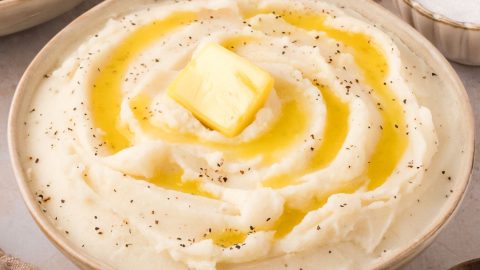




I have a confession to make: I could probably live off Mashed Potatoes.
Over the years, I’ve played around with different techniques and ingredients, and I think I’ve landed on the best mashed potato recipe ever.
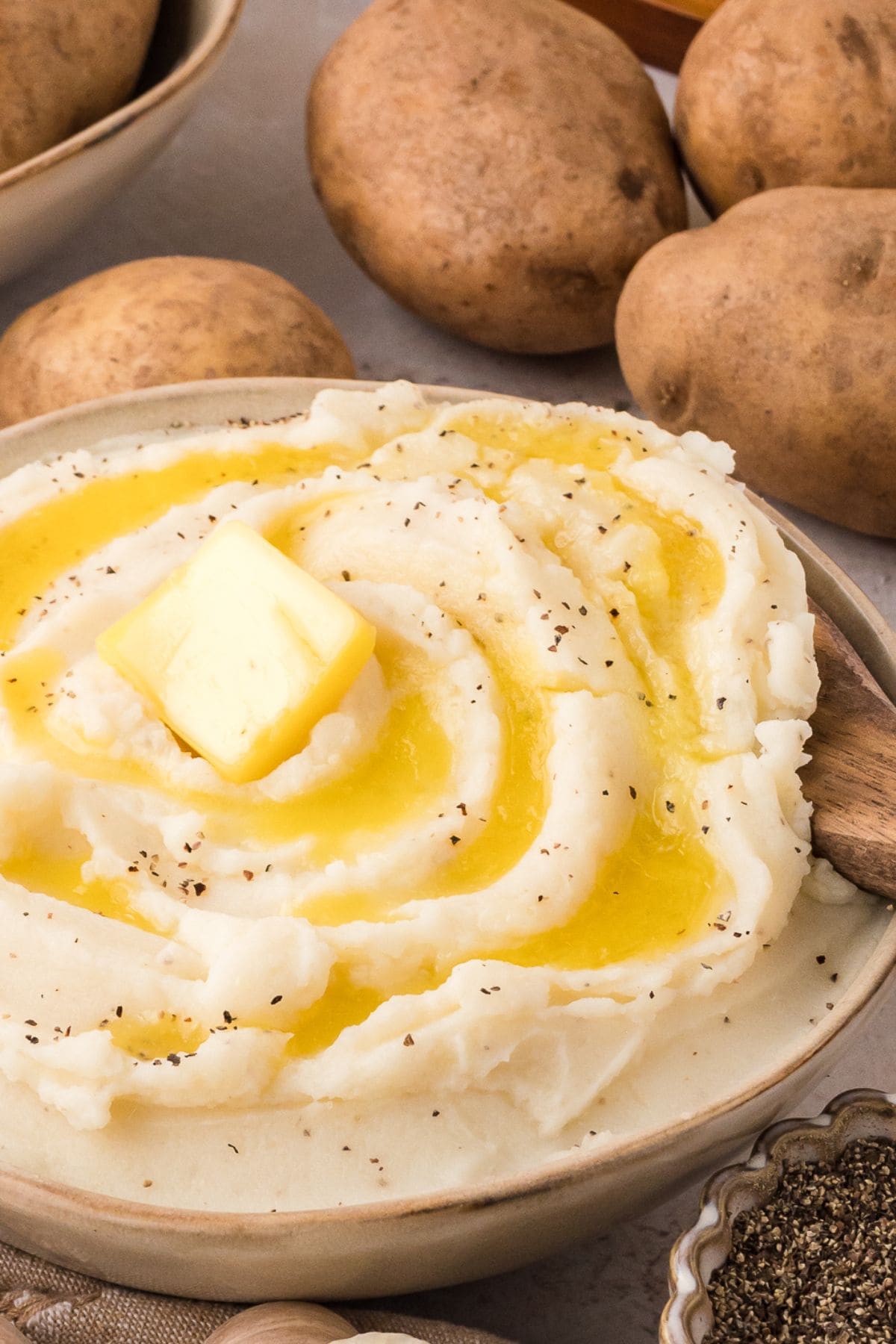
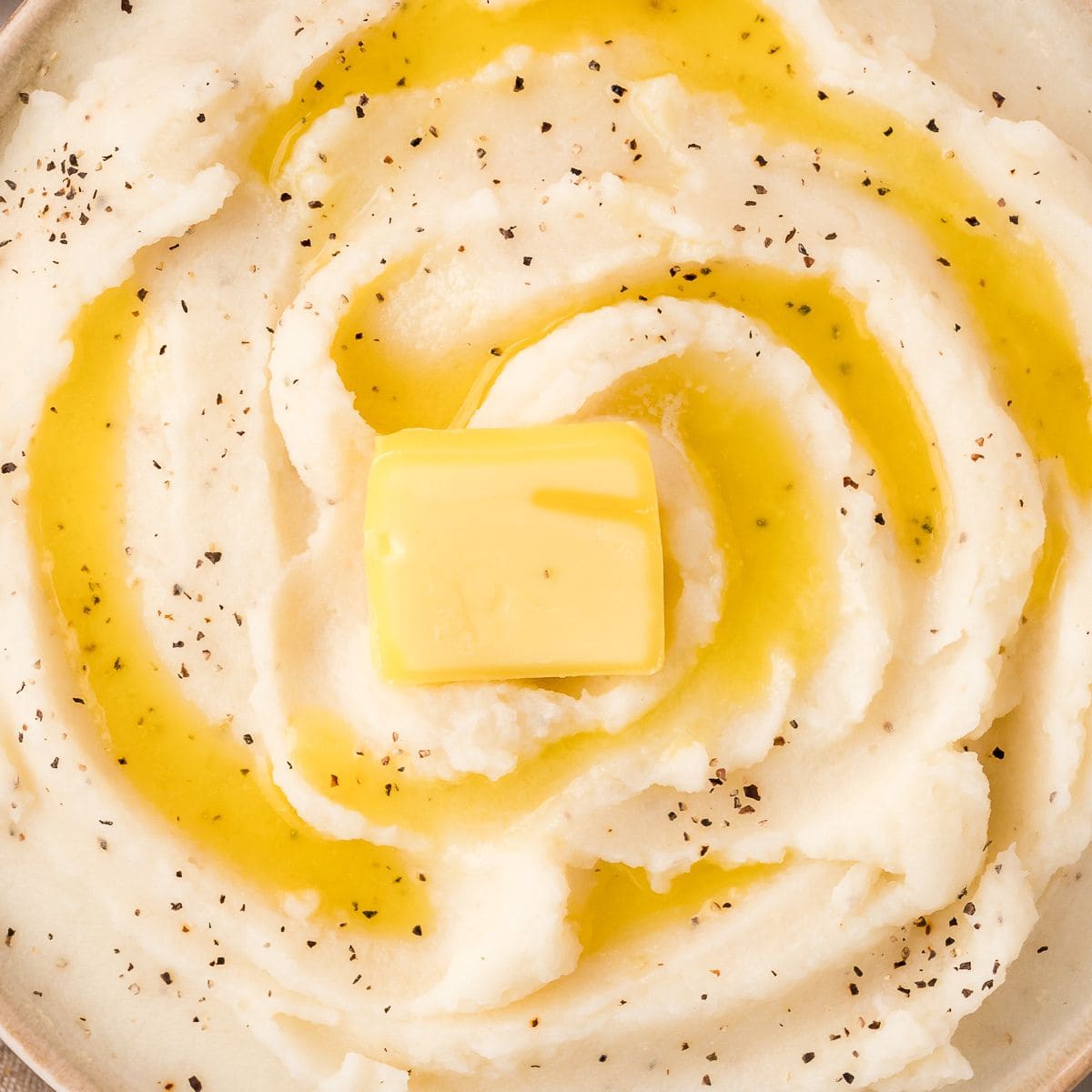
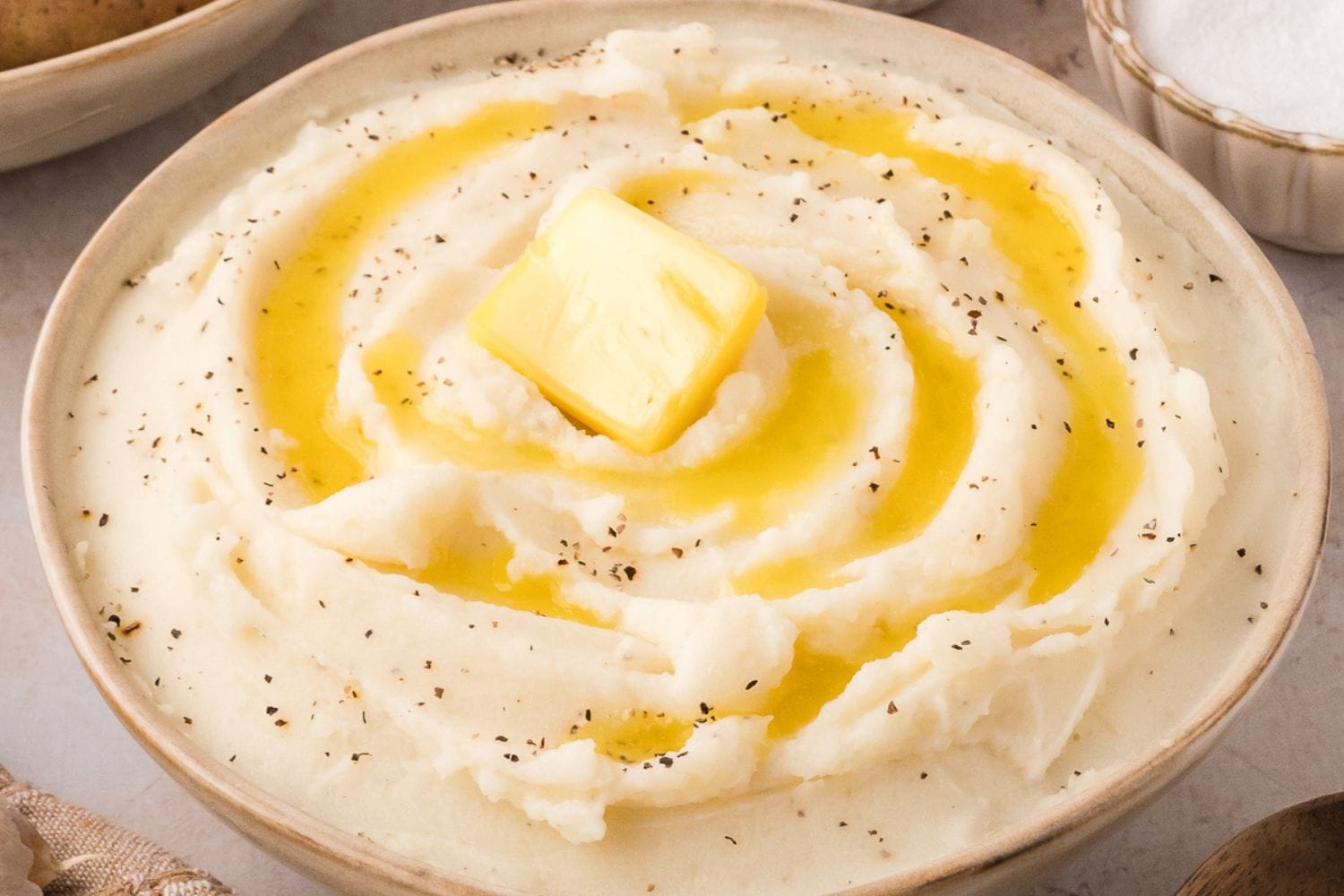
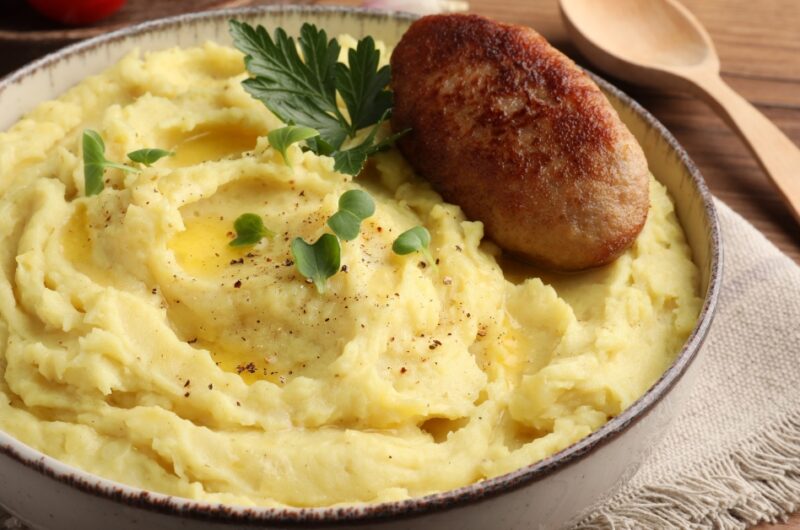
They have a silky smooth, buttery texture that just melts in your mouth with a kiss of garlic to bring out the earthy flavor of the potatoes.
It’s peak potato perfection.
WANT TO SAVE THIS RECIPE?
Now, mashed potatoes may seem simple, but there’s an art to getting them perfect.
You want them smooth but not gluey, rich but not overwhelming. And it all starts with picking the right potatoes, and a few tricks I’ve learned along the way.
So grab some potatoes, a stick (or two) of butter, and let’s make the best mashed potatoes you’ve ever had!
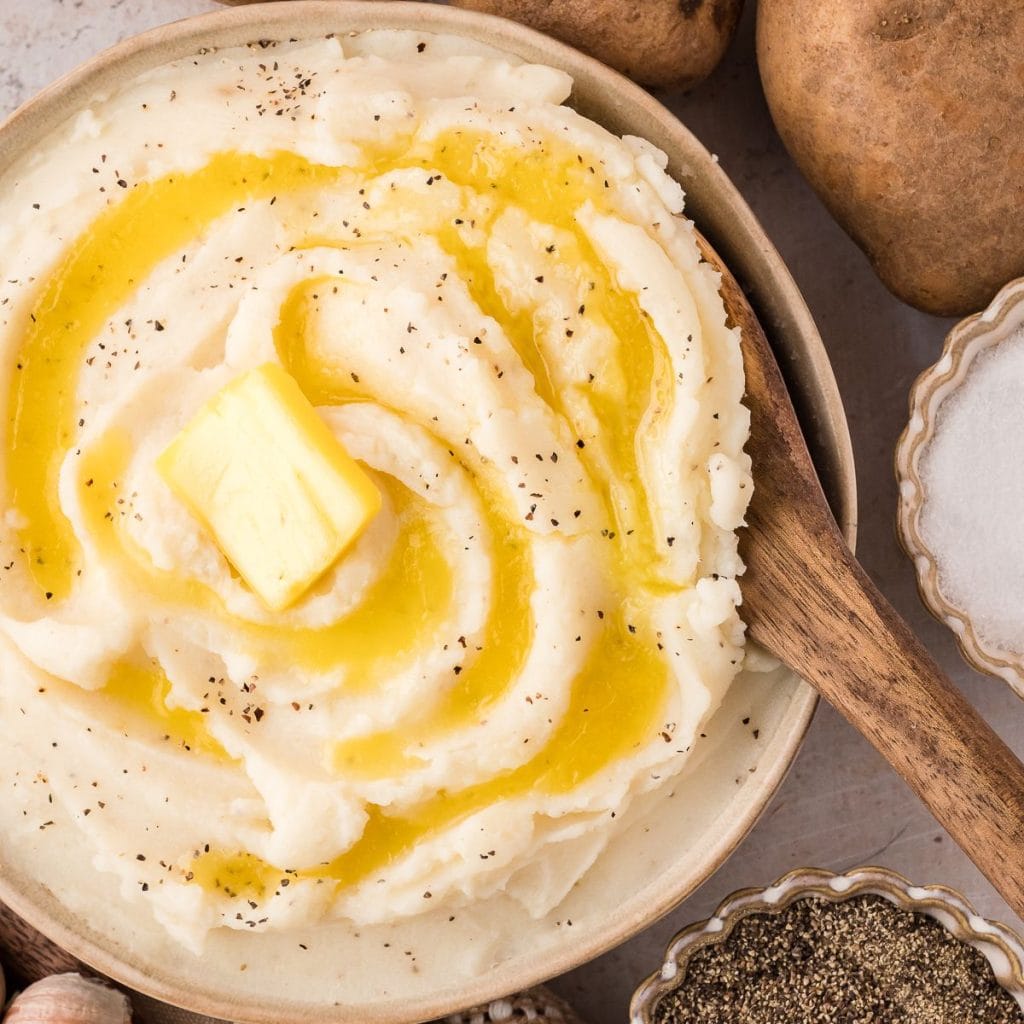
The Best Potatoes for Mashed Potatoes
Not all spuds are created equal, especially when it comes to mashed potatoes.
If you’ve ever ended up with a gluey, weirdly textured mash, chances are the potatoes were the culprit.
For the best mashed potatoes, you want spuds with a higher starch content and steer clear of waxy potatoes.
Here are some great choices:
- Russet Potatoes: High starch content, resulting in fluffy mash with a neutral flavor.
- Yukon Gold Potatoes: Medium starch, yielding a creamy texture with a buttery flavor.
For me, I like to use a combo of both. You get the fluffiness of the Russet with the rich flavors of Yukon.
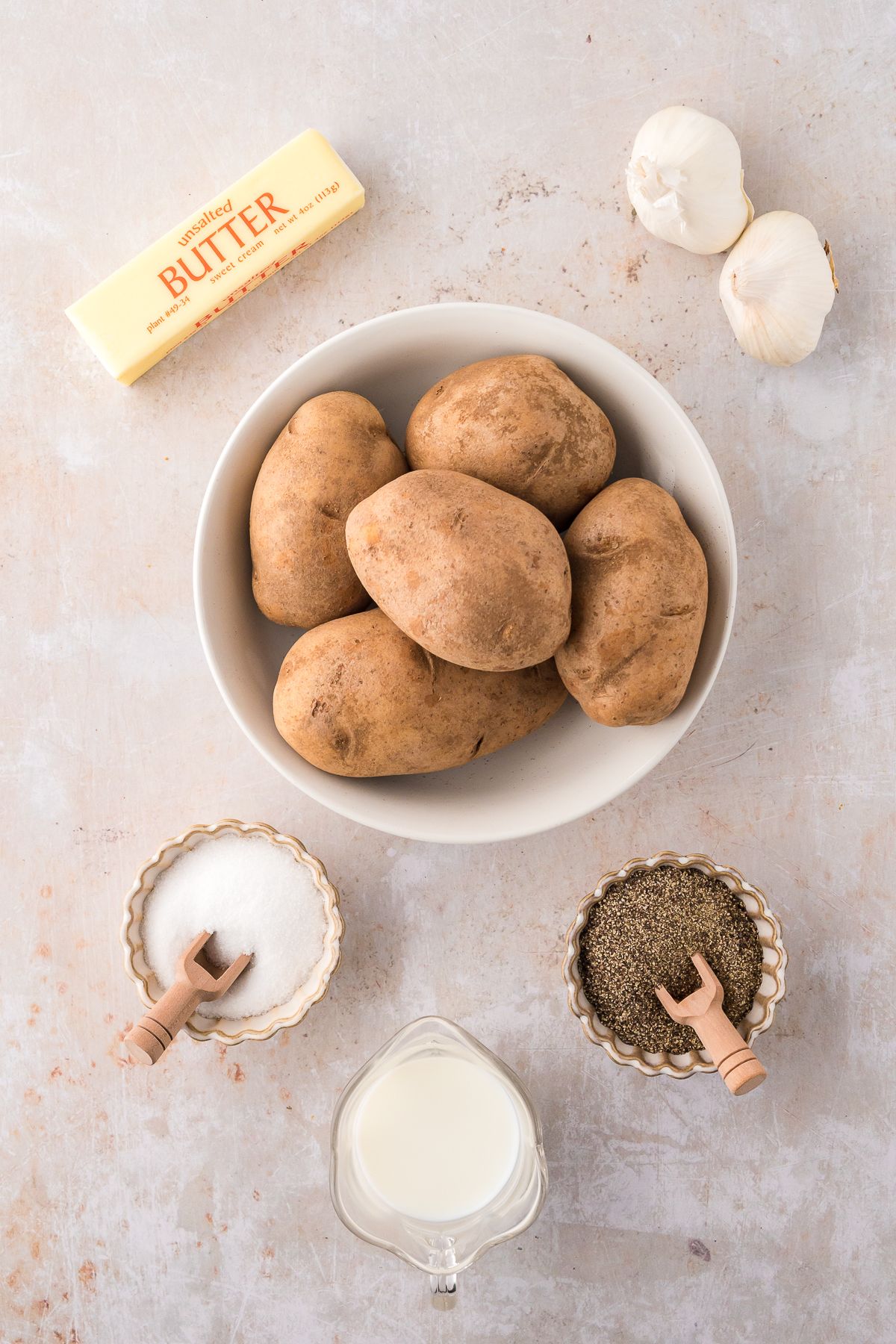
Ingredients You'll Need
- Potatoes: Opt for either Russet or Yukon Gold (or both). These varieties are starchy and perfect for achieving a fluffy and creamy mash.
- Milk: It adds creaminess and a slight sweetness. Whole milk is typically used for richer texture, but you can opt for a lower-fat version if desired.
- Butter: It infuses the mashed potatoes with a rich, velvety texture and a buttery taste. Unsalted butter works best because you can easily adjust the saltiness as needed.
- Garlic Cloves: It adds a deep, aromatic flavor that complements the earthiness of the potatoes.
- Salt and Black Pepper: It enhances the flavor and balances the creaminess of the mashed potatoes.
How to Make Mashed Potatoes
I’ve had my fair share of lumpy, gluey, and just plain sad potatoes over the years. But once I nailed the perfect method, I never looked back!
Here’s how to make these amazing mashed potatoes:
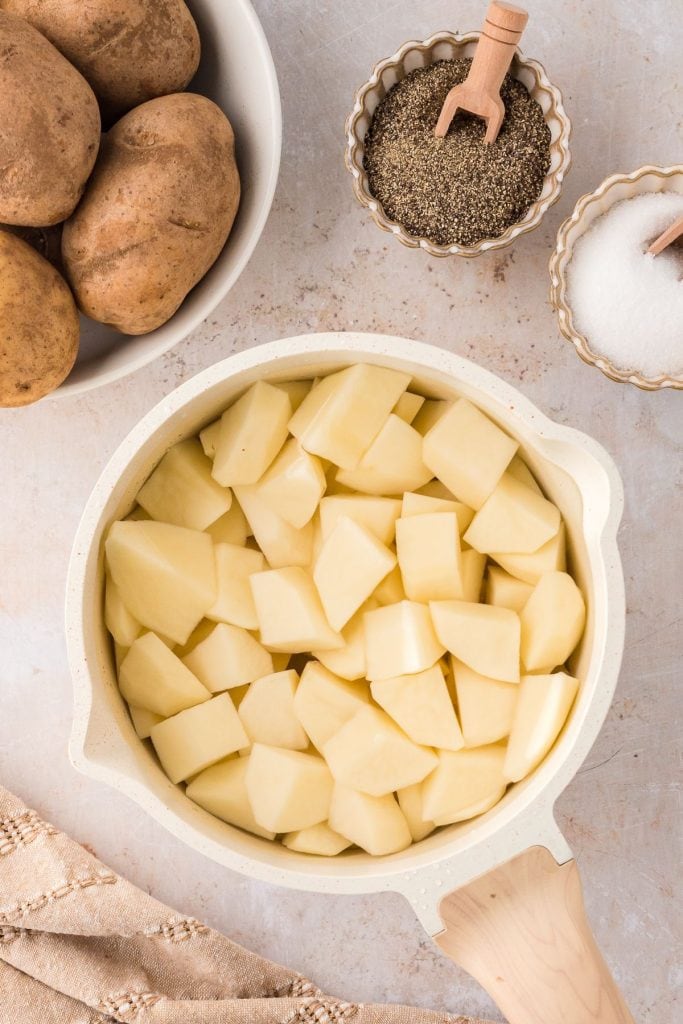
1. Prepare the potatoes. Peel the potatoes and cut them into even 1-inch cubes.
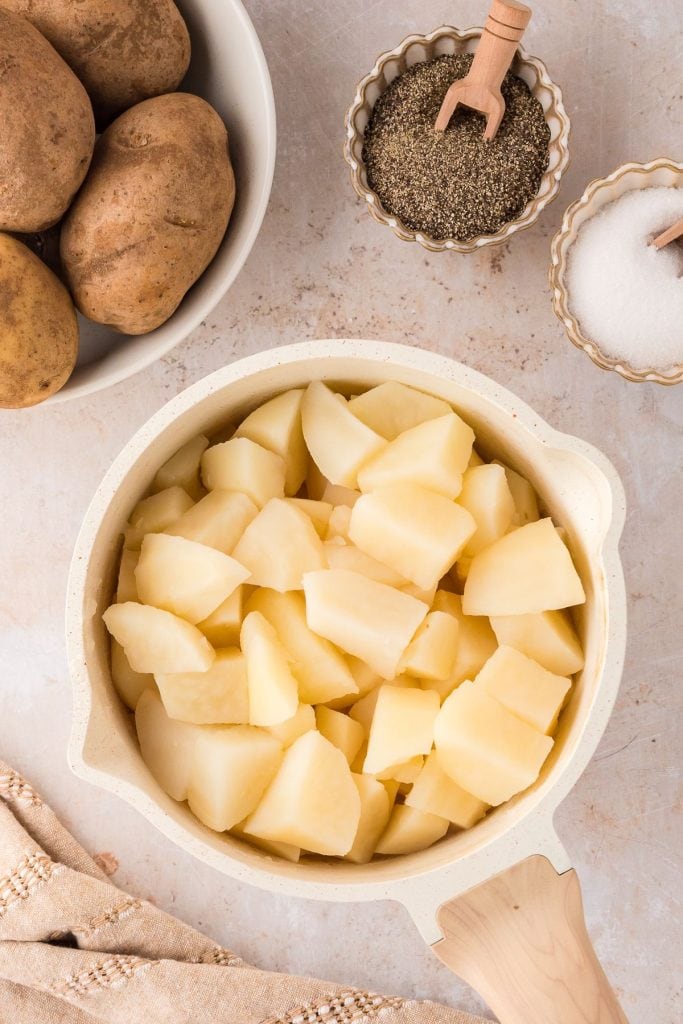
2. Boil the potatoes. Put the cubed potatoes into a pot with salted water and bring to a boil. Then, simmer them on medium-low for 15-20 minutes until they're fork-tender.
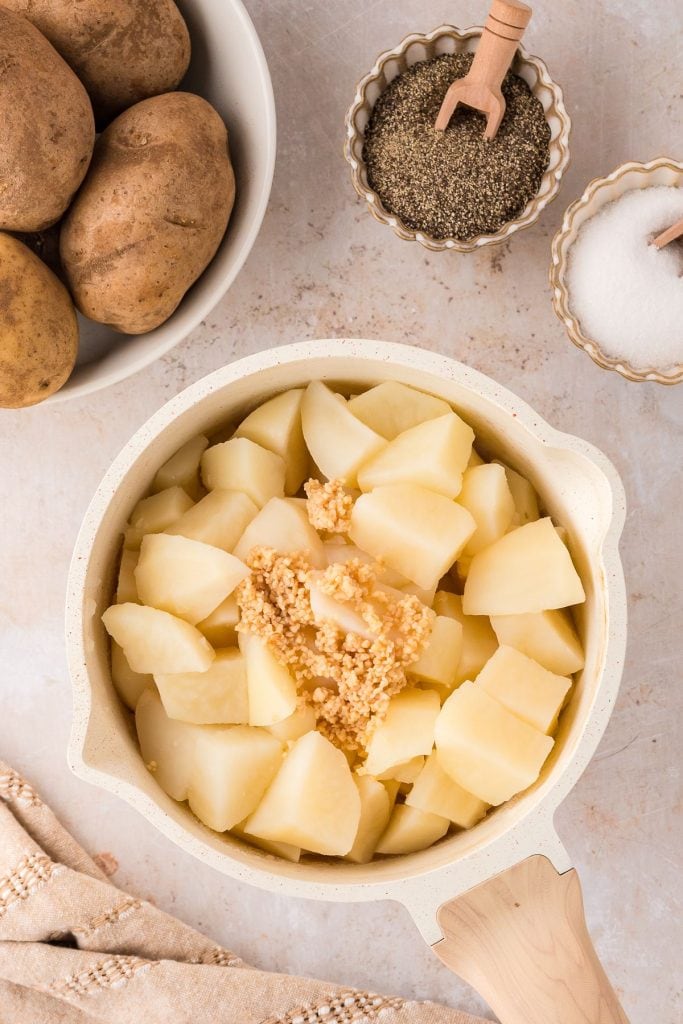
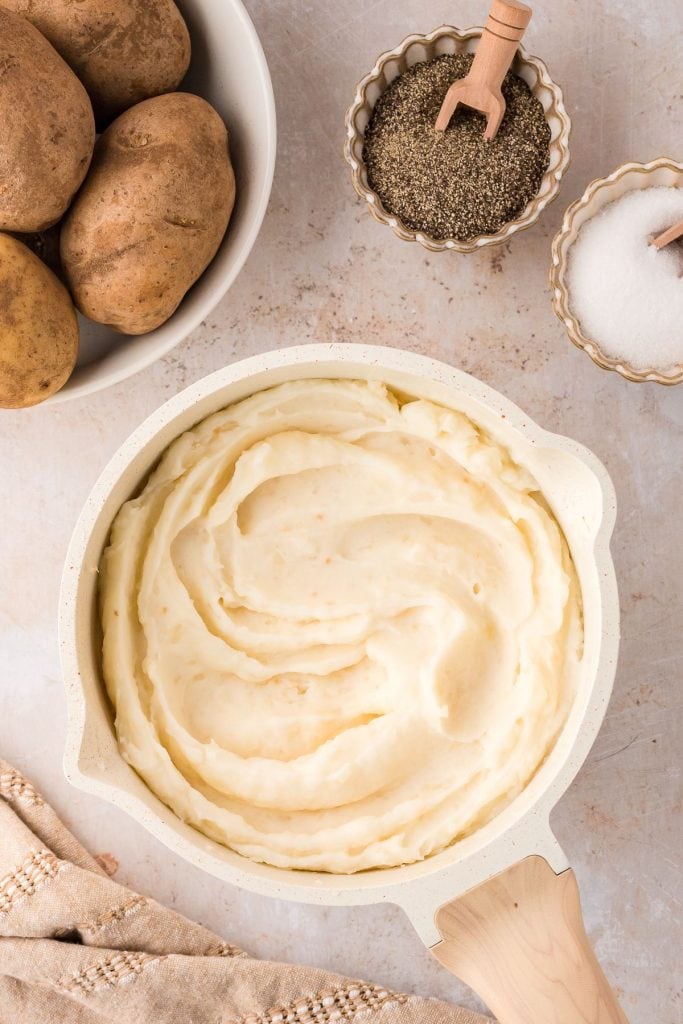
3. Drain and mash. Once cooked, drain the potatoes well using a colander. Return them to the pot. Add the minced garlic and mash the potatoes with a potato masher until smooth.
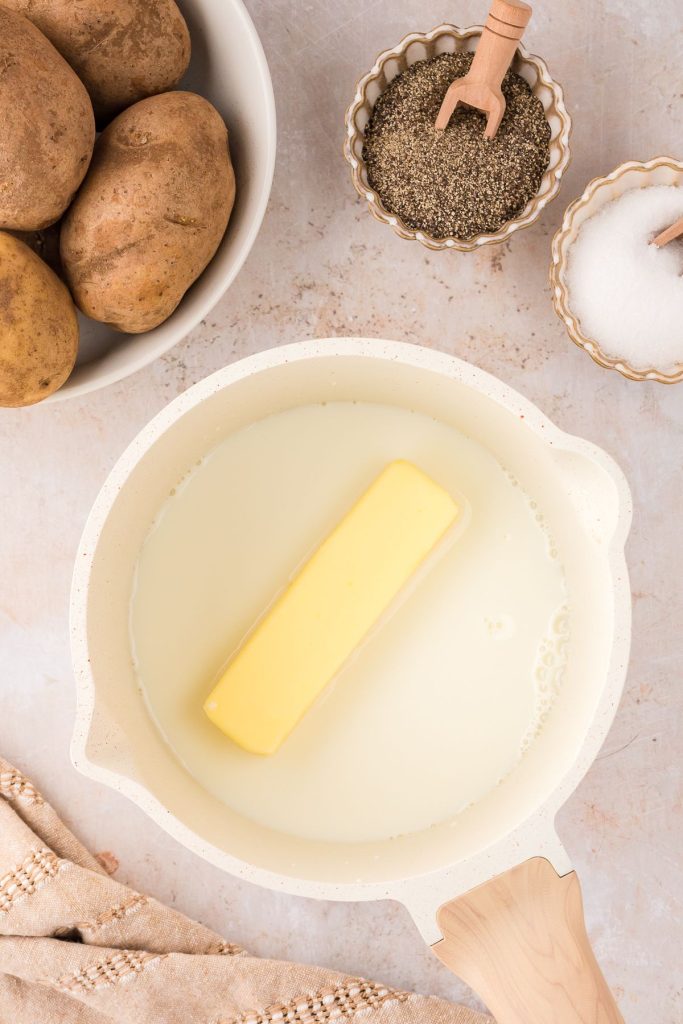
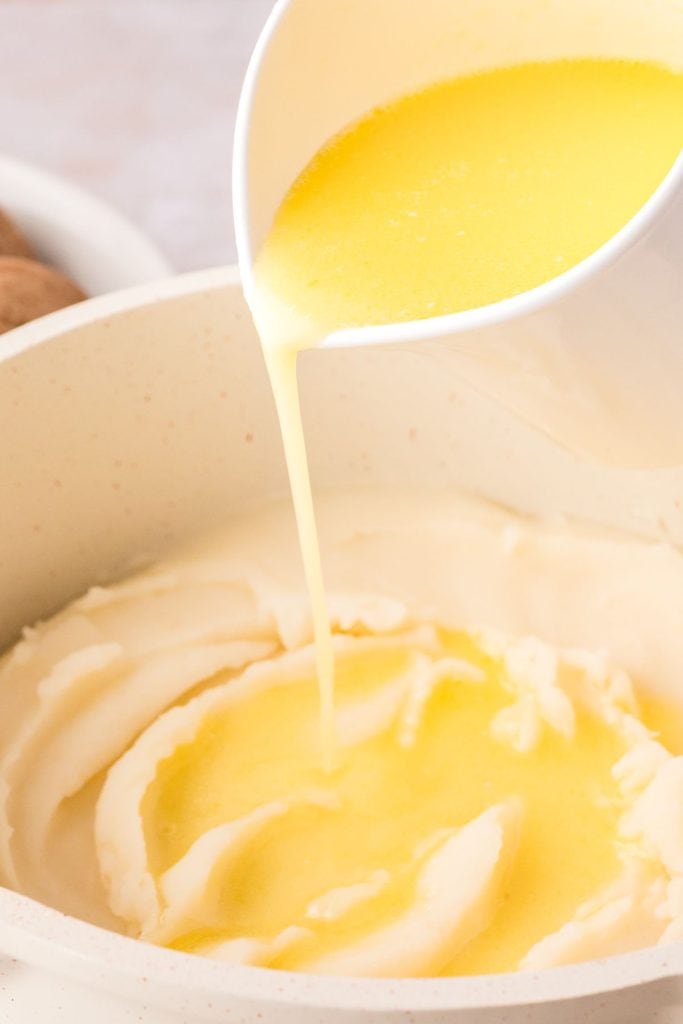
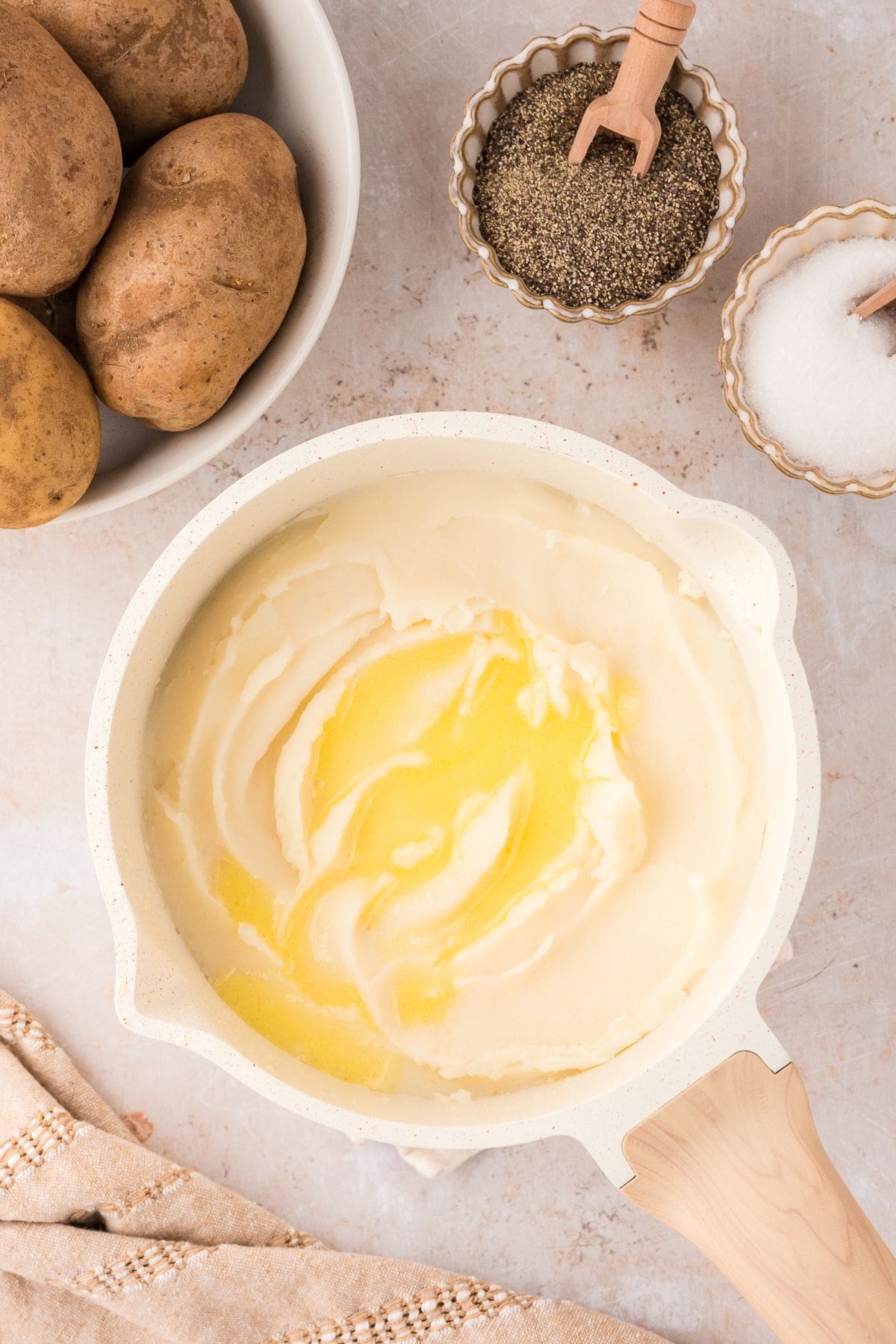
4. Heat the dairy and mix. Heat the milk and butter on low until it's melted. Gradually mix it into the mashed potatoes until you get your desired consistency. Season with salt and pepper.
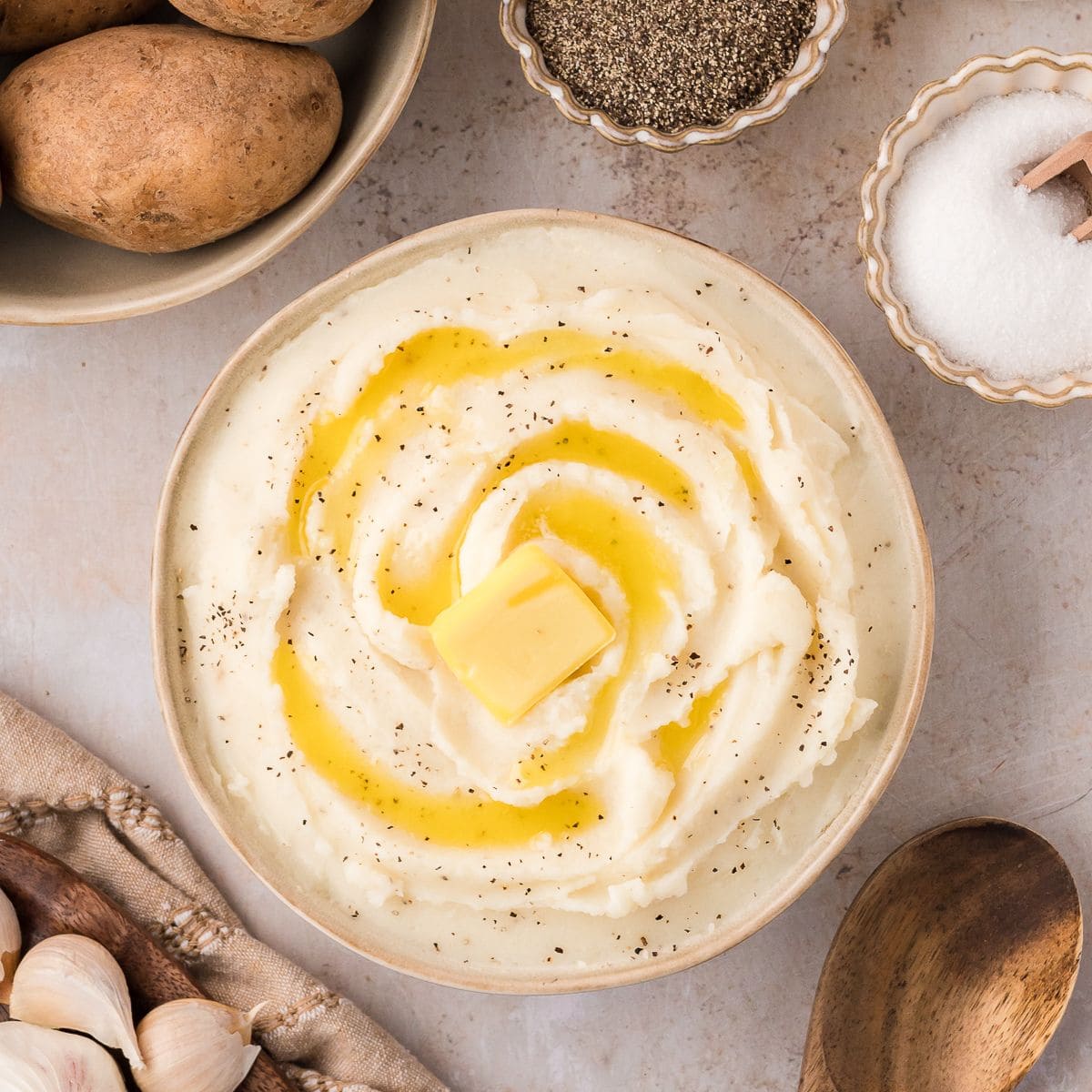
5. Serve hot. Transfer the mashed potatoes to a serving dish. Top them with a pat of butter or a sprinkle of fresh herbs if desired, and serve immediately.
Tips for Success
Want to take your mashed potatoes from good to unbelievably delicious?
After plenty of trial and error (and a few potato disasters), here are a few tricks that make all the difference.
- Drain your spuds. Allow cooked potatoes to sit in a colander for about 5 minutes to ensure they’re completely drained. Excess water can make your potatoes watery and bland.
- Start chilly. Begin boiling your potato cubes in cold water. Starting with cold water ensures that the potatoes cook more evenly.
- Don’t use a hand mixer. Mashing your spuds with a hand mixer (or a food processor) can make them gummy. For super fluffy potatoes, you can use a fork or a potato masher. For even more creaminess, use a fine sieve or using a potato ricer.
- Mash ‘em hot! Potatoes are best mashed when hot as they absorb milk and butter more easily, and that’s also true for the dairy. Heat your milk, cream, or butter slightly before adding it to your potatoes. This step makes it easier to mix, resulting in a creamier texture.
- Don’t overmix. It feels almost therapeutic to stir buttery cream into your mashed potatoes. But once everything is incorporated, put down the spoon! Overmixing can create gummy potatoes, and you don’t want that.
What to Add to Mashed Potatoes
These mashed potatoes are basically a blank canvas for deliciousness, and I fully support getting creative with them!
Sure, butter, milk, and salt are the holy trinity of classic mashed potatoes, but why stop there? Here are some things to add to take them to a whole new level.
- Greek yogurt, heavy cream, cream cheese, mayonnaise, or sour cream
- Fresh chives, sliced green onions, or chopped bacon
- Roasted garlic, rosemary, or thyme
- Cheeses, like Parmesan, gouda, or cheddar
- Ranch seasoning packet
- Chicken broth
What to Serve with Mashed Potatoes
Honestly, I could make a meal out of just mashed potatoes, but they’re even better when they’ve got something tasty to go with them!
Here are a few pairing suggestions for mashed potatoes:
- Pork: Oven-fried Pork Chops
- Chicken: Grilled Chicken Tenders, Chicken Piccata
- Beef: Cracker Barrel Meatloaf, T-Bone Steak
- Turkey: Baked Turkey Wings
- Gravy: Sausage Gravy, Cheese Sauce
- Sides: Roasted Brussels Sprouts, Rotisserie Chicken Salad, Garlic Bread, Creamy Broccoli Salad, 1905 Salad, Dinner Rolls
Make-Ahead Method
Want to get ahead of the game? Here’s a method for make-ahead mashed potatoes that will keep well and still taste great:
- Preparation for storing: Boil and mash the potatoes, then add butter, garlic, milk, and season with salt and pepper. Cool to room temperature, transfer to an airtight container, and refrigerate for 1-2 days.
- On the day you plan to serve: Preheat the oven to 325°F and transfer the mashed potatoes to a greased casserole dish. Top with butter and cover with foil. Bake for 35-40 minutes, removing the foil during the last 10 minutes for a golden top. Serve and enjoy!
How to Store and Reheat Mashed Potatoes
Properly storing and reheating mashed potatoes is crucial to maintaining their texture and flavor. Here's how to do it:
To Store. Let the mashed potatoes cool to room temperature, then transfer them to an airtight container. For quicker cooling, store them in shallow containers. Keep them in the refrigerator for 3-5 days.
To Freeze. Cool the mashed potatoes to room temperature as above. Place them in airtight, freezer-safe containers or heavy-duty freezer bags. You can store mashed potatoes in the freezer for up to 1 month. When ready to serve, defrost them in the fridge before reheating.
To Reheat. You can reheat mashed potatoes in the microwave, oven, or on the stovetop. Microwave: Heat it on high for 1-2 minutes, stir, then continue heating in 30-second intervals, stirring between each, until hot. Oven: Preheat your oven to 350°F (175°C). Place the potatoes in an oven-safe dish and cover them with aluminum foil. Heat them for 20-30 minutes or until hot. Stovetop: Place the mashed potatoes in a saucepan over medium-low heat. Stir occasionally, and add additional milk or butter if needed for moisture.
More Amazing Potato Sides You'll Love
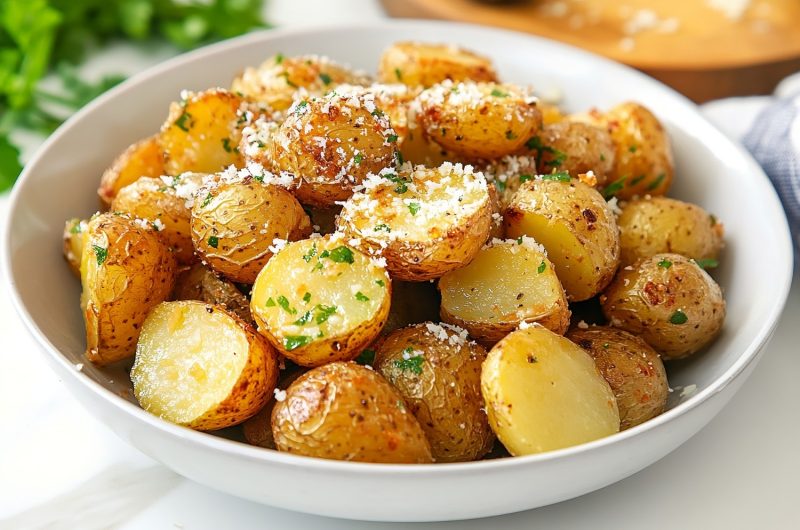
Baked Parmesan Garlic Potato Wedges
Mashed Potatoes
This recipe makes the absolute best mashed potatoes! They're creamy, fluffy, buttery, and totally irresistible!
6-8
servings5
minutes30
minutes288
kcalIngredients
3 pounds potatoes, peeled and cut into 1-inch cubes
2 garlic cloves, minced, or more to taste
1 cup milk
1/2 cup butter
Salt and pepper, to taste
Instructions
- Place the cubed potatoes in a large pot and cover with salted water. Bring them to a boil over high heat. Reduce heat to medium-low and simmer for 15-20 minutes, until potatoes are fork-tender.
- Drain the potatoes and return them to the hot pot. Add the minced garlic. Mash the potatoes and garlic together with a potato masher until smooth.
- Warm the milk and butter in a small saucepan over low heat until the butter is melted. Slowly incorporate the milk mixture into the mashed potatoes, mashing continuously until the potatoes reach the desired consistency. Season them generously with salt and pepper.
- Serve and enjoy!
Notes
- Start by placing your potato cubes in cold water and bringing them to a boil. This approach guarantees uniformly cooked potatoes.
- If you like mashed potatoes with chunks, just mash gently. For ultra-smooth potatoes, use a sieve or potato ricer.
- Add extra seasonings, cheese, herbs, and spices to elevate the flavor profile.
Nutrition
- Calories: 288kcal
- Fat: 14g
- Saturated Fat: 9g
- Cholesterol: 39mg
- Sodium: 129mg
- Potassium: 878mg
- Carbohydrates: 30g
- Fiber: 4g
- Sugar: 3g
- Protein: 5g
- Vitamin C: 38mg








2 Comments
Cooked these for Christmas. They were delicious!
For creamier potatoes, I generally add 2-3 tablespoons of mayonnaise. I find the combination of mayo and garlic seem to enhance and compliment each other.