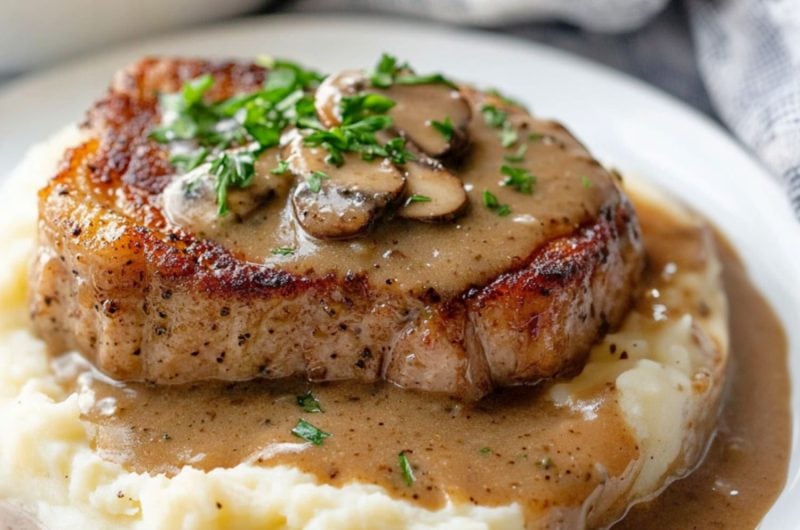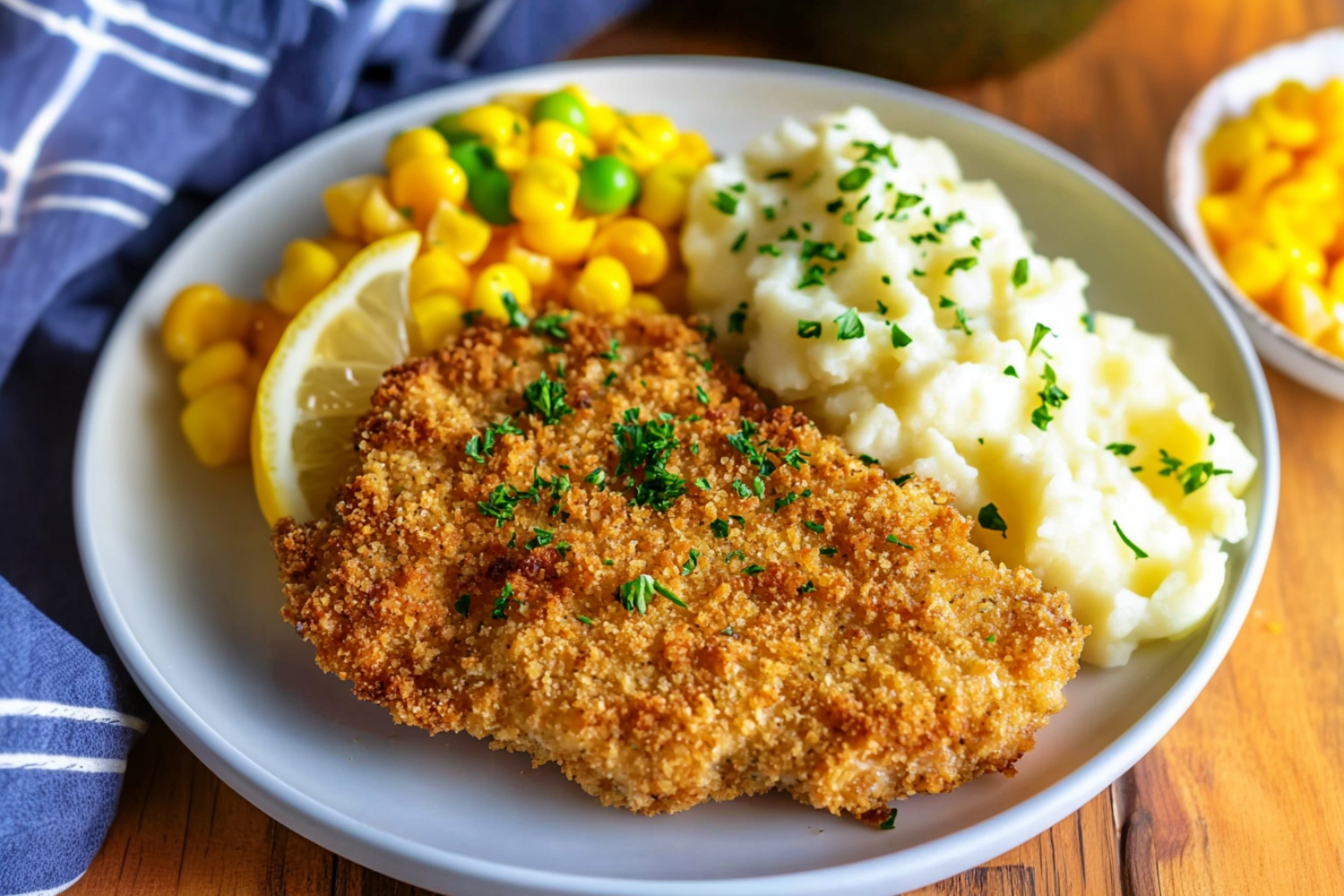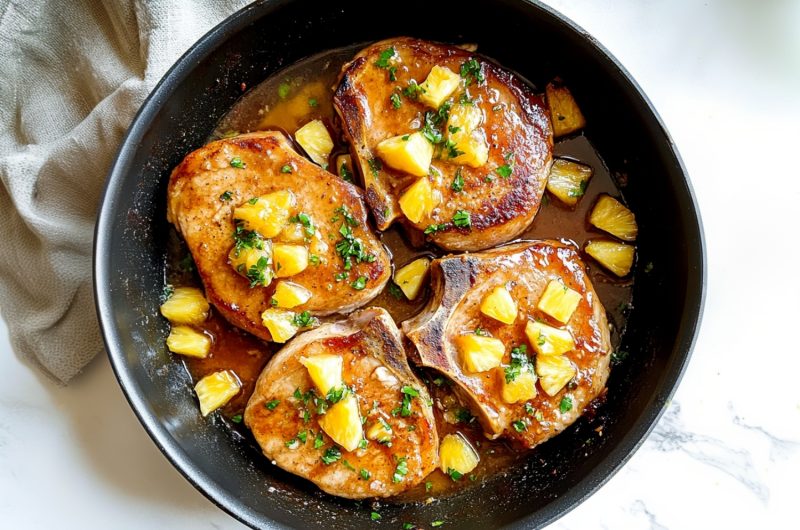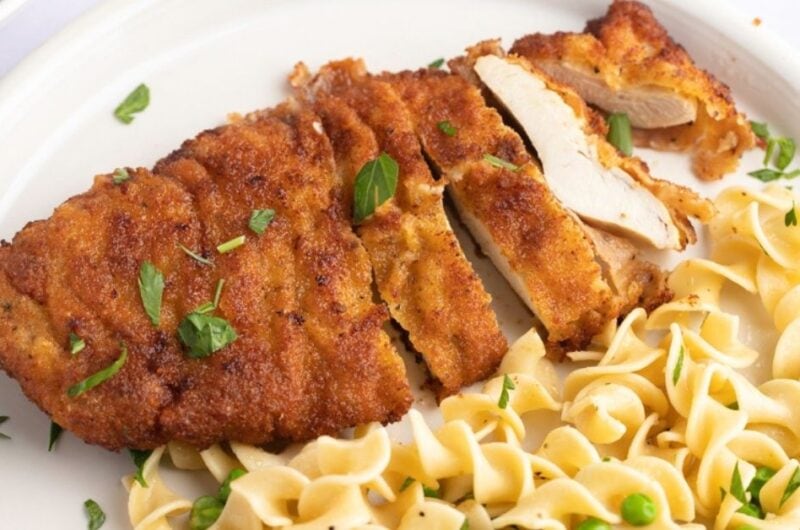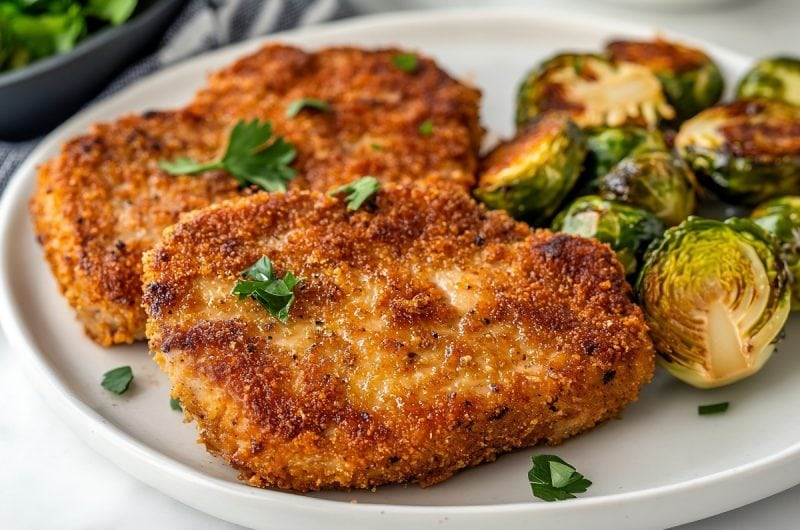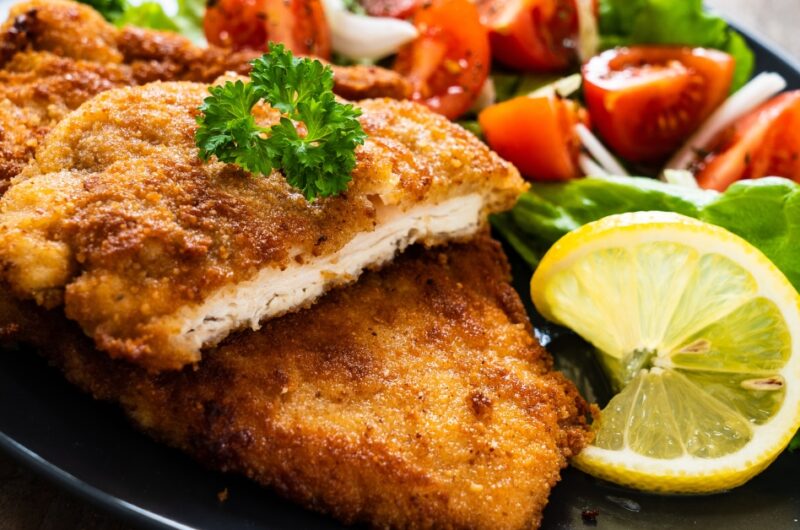



My classic German pork schnitzel is crispy, savory, and irresistible! Tender pork chops are coated with seasoned breadcrumbs and cooked to golden perfection.
It’s a timeless dish no one can possibly resist, and it's a family favorite in my household! A satisfyingly crunchy exterior gives way to perfectly cooked meat. It practically melts in your mouth!
I like to serve it with fresh lemon wedges, and don't forget the side of mashed potatoes! Trust me, this authentic Wiener schnitzel brings a taste of Germany right into your kitchen.

WANT TO SAVE THIS RECIPE?
Why You’ll Love This Pork Schnitzel
Quick and Easy: I love how this dish delivers restaurant-quality results from prep to plate in under 30 minutes. It uses simple pantry ingredients and straightforward techniques.
Full of Flavor: The seasoned coating is flavored with garlic and onion powders for a fantastic taste. It perfectly complements the juicy pork. The fresh lemon adds a bright, zippy finish.
Crispy Texture: The panko and the oil-butter frying method creates an irresistibly crunchy golden-brown crust. It's the perfect contrast to the juicy meat!
Versatile: This schnitzel recipe pairs beautifully with a wide range of sides. I serve it with anything from creamy potatoes or noodles to crisp salads or roasted veggies.

Ingredients for Pork Schnitzel
- Boneless Pork Chops: Tender cuts of pork loin get pounded thin to create the classic schnitzel base. I use chops with a 1/2-inch initial thickness to achieve the proper texture.
- All-Purpose Flour: Creates the first layer of breading and helps the egg mixture adhere to the meat. It's a must for a crispy exterior.
- Seasonings: A savory blend of salt, pepper, garlic powder, and onion powder. They infuse the flour coating with essential flavors.
- Eggs: The binding agent between the flour and breadcrumb layers.
- Whole Milk: Helps create a richer coating to promote even browning. Stick to whole milk, as the fat content aids in flavor development.
- Panko Breadcrumbs: They're lighter and crispier than traditional breadcrumbs and create the schnitzel’s signature crunchy exterior.
- Olive or Canola Oil: For pan-frying. Canola offers a neutral flavor, while olive oil adds subtle richness.
- Unsalted Butter: I add it to the frying oil to enhance flavor and promote even browning. I like unsalted butter since it helps me control the saltiness in the dish.
- Lemon Wedges: The traditional garnish brightens the dish and cuts through the richness of the fried coating.

How to Make Pork Schnitzel
You won't believe how easy this schnitzel recipe is to make! My family loves it, so I make it on the regular. Follow my simple steps.
1. POUND CHOPS. Place each pork chop between two sheets of plastic wrap. Pound them gently with a meat mallet on a sturdy surface until 1/4 inch thick.
2. BREAD CHOPS. Mix the flour, garlic, onion powder, salt, and pepper in a shallow dish. Whisk the eggs and milk in a second small bowl. Add the breadcrumbs to a third. Then, dredge each pork chop in the flour first. Shake off excess, then dip in the egg mixture and, finally, the panko.
3. CHILL CHOPS. Place the breaded chops on a plate and chill, uncovered, for 5 to 10 minutes.
4. COOK CHOPS. Cook two chops in a preheated skillet with 3 tablespoons of oil and a tablespoon of butter over medium-high heat. Drain the cooked chops on a wire rack over a baking sheet. Sometimes, I use a paper towel-lined plate.
5. REPEAT PROCESS. Repeat with remaining chops. Discard the oil and wipe the skillet clean. Add the remaining 3 tablespoons of oil and 1 tablespoon of butter to the skillet and cook the remaining cutlets.
6. SERVE & ENJOY. Serve the schnitzels immediately with lemon wedges, and enjoy!

Tips for the Best Pork Schnitzel
This easy recipe is tough to mess up, but my tried-and-true tips will make them even more irresistible!
- Pound properly. Use gentle, even strokes when pounding the meat. Work from the center outward to achieve uniform thickness without tearing the meat. Keep pounding until the chops are 1/4 inch thick.
- Be firm. When pressing the chops into the breadcrumbs, do so gently but firmly. It takes a bit of pressure to create a sturdy, even coating that won’t flake off.
- Preheat and test the oil. Heat the oil and butter until the butter is bubbling but not smoking. I always test the temperature by adding a small breadcrumb. If it sizzles, the mixture is ready.
- Don’t overcrowd! Use a large skillet and fry only 1 to 2 chops at a time. Overcrowding lowers the oil temperature, leading to greasy schnitzels.
- Flip only once. Flipping the chops too often will disturb the crispy breading, causing it to flake off. Cook the first side until done, then flip just once before cooking the other.
- Experiment and have fun. Try different seasonings for the breadcrumbs. Smoked paprika, Parmesan, and parsley all work well. Swap the panko for crushed crackers or pretzels for added crunch. For extra flavor, I sometimes top the schnitzel with caramelized onions.

What to Serve with Pork Schnitzel
For a feast to remember, I typically pair pork schnitzel with any of the following sides:
- Potato salad (especially German potato salad)
- Spaetzle
- Mashed potatoes
- Cucumber salad
- Sauerkraut
- Green beans
- Buttered noodles
How to Store
Have leftover schnitzel? Follow these tips to store it properly so it cooks up nice and crispy again.
To Store: Store in an airtight container in the refrigerator for 3-4 days. Place parchment paper between layers to prevent the breading from sticking together.
To Freeze: Lay flat on a parchment-lined baking sheet. Freeze for 1 hour, then transfer them to an air-tight container or freezer bag. Store for up to 3 months. Separate layers with parchment paper to prevent sticking.
To Reheat: Place on a wire rack or baking sheet. Heat in a 350-degree oven for 10-15 minutes, flipping halfway through. For the best results, avoid using the microwave, which will make the breading soggy.
Pork Schnitzel
This tempting pork schnitzel is juicy on the inside, crispy on the outside, and full of flavor! Serve it with fluffy mashed potatoes for an unforgettable meal.
4
servings30
minutes15
minutes610
kcalIngredients
4 boneless pork chops, 1/2-inch thick, trimmed
1/4 cup all-purpose flour
1 teaspoon garlic powder
1 teaspoon onion powder
1 teaspoon salt
1/2 teaspoon freshly ground black pepper
2 large eggs
1/4 cup whole milk
1 1/2 cups panko breadcrumbs
6 tablespoons olive or canola oil, divided
2 tablespoons unsalted butter, divided
lemon wedges for serving
Instructions
- Place each pork chop between two sheets of plastic wrap on a sturdy surface, such as a cutting board. Use a meat mallet to gently pound each pork chop to a uniform thickness of about 1/4 inch.
- In a shallow dish, combine the flour, garlic powder, onion powder, salt, and pepper. In another shallow dish, whisk together the eggs and milk until smooth. Place the panko breadcrumbs in a third shallow dish.
- Working one at a time, dredge each pork chop in the seasoned flour mixture, shaking off any excess. Next, dip it into the egg mixture, allowing any excess to drip off. Then, coat it thoroughly in the breadcrumbs. Press lightly to ensure they adhere well.
- Place the breaded pork chops on a plate or tray. Chill them in the refrigerator, uncovered, for 5–10 minutes to help the coating set.
- Heat 3 tablespoons of oil and 1 tablespoon of butter in a large skillet over medium-high heat. When the butter is melted and bubbling, add two pork chops to the skillet. Cook for 2–3 minutes per side. Or until each side is golden brown and the pork reaches an internal temperature of 145 degrees. Adjust the heat as needed to prevent burning. Transfer the cooked chops to a wire rack set over a baking sheet. This will keep them crispy while you finish cooking the rest.
- Carefully discard the oil from the skillet and wipe it clean with a paper towel. Add the remaining 3 tablespoons of oil and 1 tablespoon of butter to the skillet. Repeat the cooking process with the remaining pork chops.
- Serve the schnitzels immediately with lemon wedges on the side for a bright, zesty finish. Enjoy!
Notes
- When pounding, use gentle, even strokes, working from the center out.
- Preheat the oil and test the temperature by adding a small breadcrumb. If it sizzles, the mixture is ready.
- Cook in batches to avoid overcrowding the pan. Flip each pork chop only once.
Nutrition
- Total number of serves: 4
- Calories: 610kcal
- Fat: 40g
- Saturated Fat: 9g
- Sodium: 853mg
- Potassium: 628mg
- Carbohydrates: 24g
- Fiber: 1g
- Sugar: 2g
- Protein: 36g
- Vitamin A: 341mcg
- Calcium: 90mg
- Iron: 2mg
- Vitamin D: 1mcg
- Vitamin E: 4mg
- Vitamin K: 17mcg
- Vitamin B6: 1mg
- Vitamin B12: 1mcg
- Folate: 51mcg
- Magnesium: 52mg
- Zinc: 2mg
- Selenium: 60mcg
- Copper: .17mg
- Manganese: .32mg