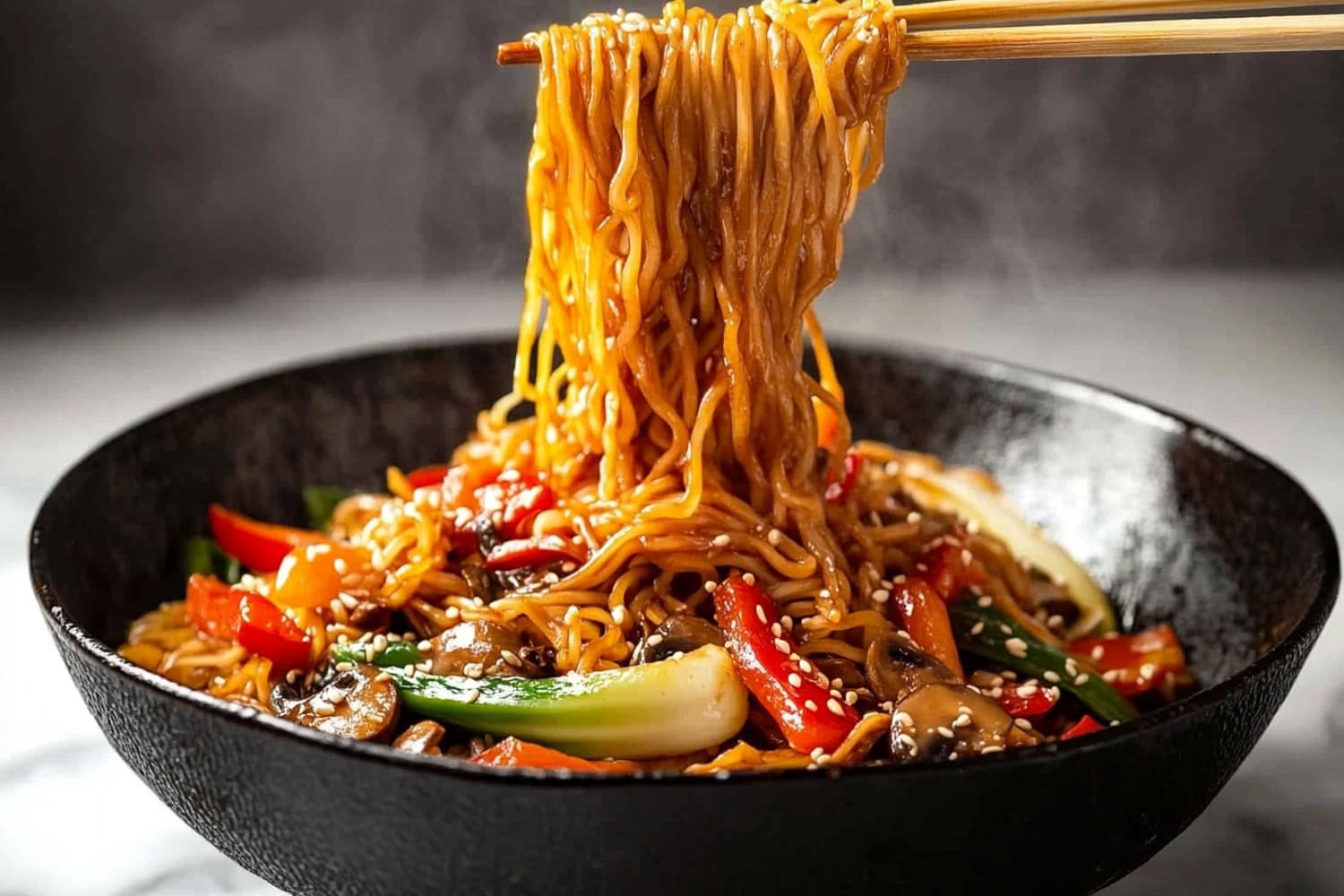


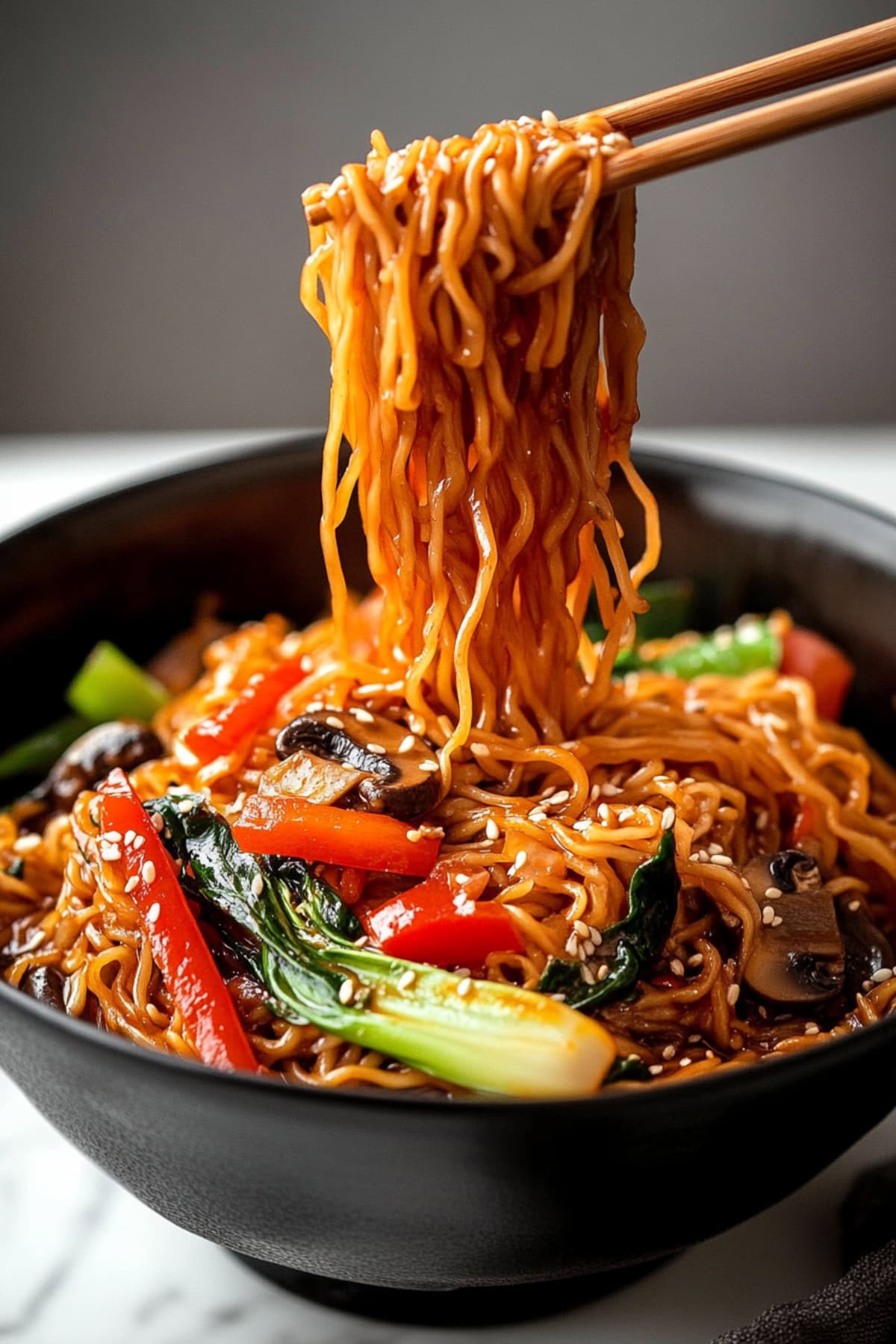
This Easy Lo Mein is fresher and tastier than takeout! It’s my number one when I crave stir-fry on a busy weeknight.
I’m talking chewy noodles, colorful crisp veggies, and a crave-worthy sweet, savory, sauce. You get those umami flavors you crave plus a hint of spice.
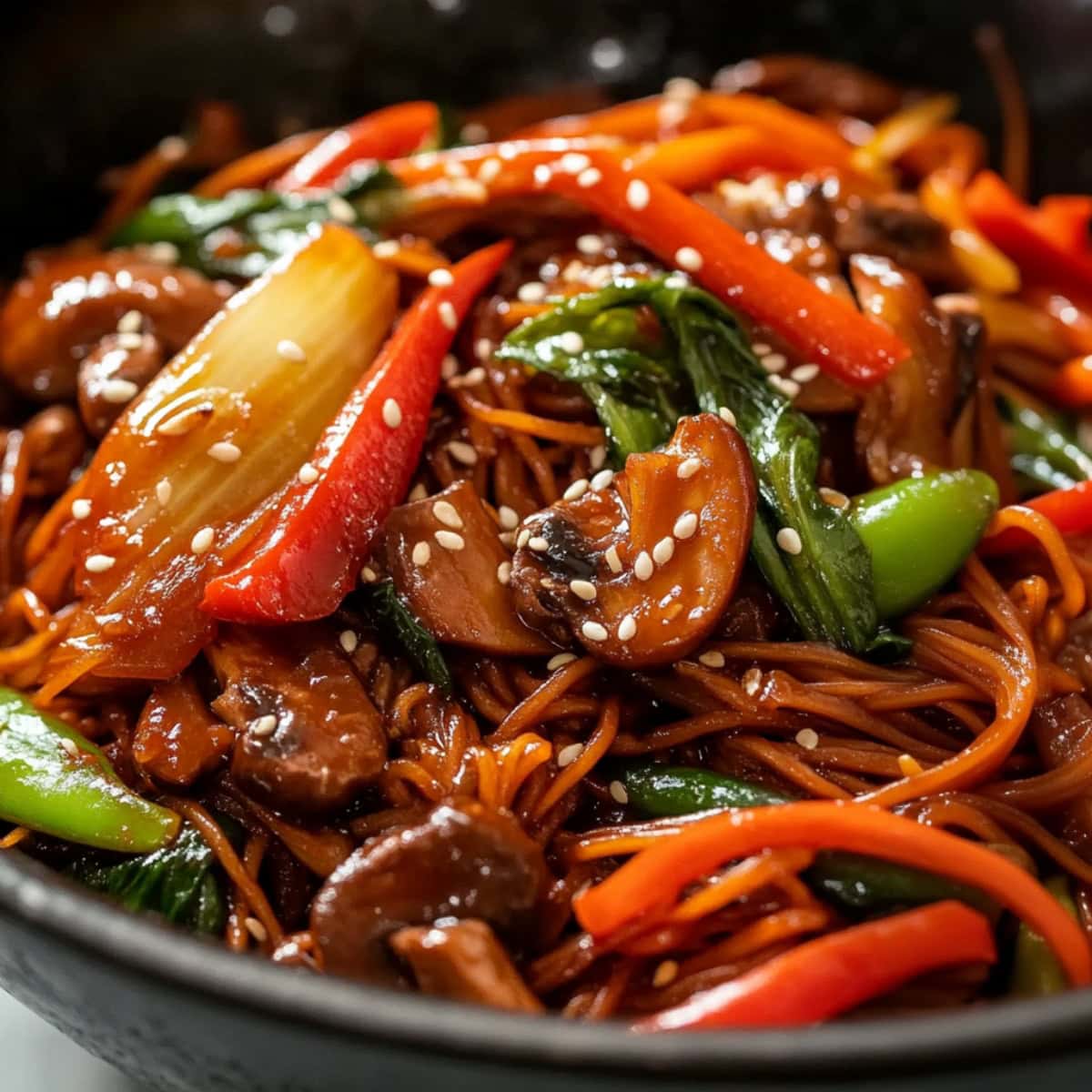
I love how the glossy noodles soak up the umami-packed sauce, with notes of soy sauce and ginger. And, the sweet crunch of bell peppers and snow peas.
I mean, can you say crave-worthy?
These stir-fried noodles are endlessly customizable, too. Add chicken, shrimp, beef, or tofu. Or, use up whatever veggies you have on hand.
Doctored up or not, nothing makes me happier than a big, hot bowl of umami Asian noodles. And this quick lo mein hits the spot!
WANT TO SAVE THIS RECIPE?
What’s the Difference Between Lo Mein and Chow Mein?
While lo mein and chow mein are both Chinese egg noodle dishes, don’t be confused! The two are not the same.
Lo mein features thicker, chewier noodles that are gently boiled, then tossed in a savory sauce. Chow mein, on the other hand, is all about that crispy texture. The thinner noodles are stir-fried, adding a nice crunch.
Whether you like your noodles soft, crunchy, thick, or thin, both dishes are delicious!
Ingredients for Lo Mein
- Lo Mein Noodles: Thick, chewy noodles made from wheat flour and egg. Fresh noodles are best, but dried work too. If you can’t find either, use spaghetti for a similar texture.
- Fresh Vegetables: I add garlic for depth, red bell peppers for sweetness, carrots for crunch, and mushrooms for earthiness. Snow peas and bok choy also add crispness.
- Low-Sodium Soy Sauce: Adds a savory, umami depth. I use low-sodium to control the salt. You can try light or dark soy sauce, but the flavor will vary.
- Granulated Sugar: I add a pinch for sweetness to balance the sauce.
- Sesame Oil: Enhances the aroma and adds a rich, toasty, nutty taste. For an even deeper flavor, use toasted sesame oil.
- Ground Ginger: I love how it rounds out the aromatics with a warm, spicy finish.
- Sriracha: Adds heat and tanginess. Use as much or as little as you like.
- Green Onions & Sesame Seeds: I garnish with both. Green onions provide color and a fresh, mild onion flavor. Sesame seeds add nutty crunchiness.
How to Make Lo Mein
There’s a reason I call this dish easy—it’s ridiculously simple to make! In just five quick steps, you’ll have a bowl of perfectly chewy, umami noodles.
1. Make the sauce. Whisk the sauce ingredients in a small bowl until well combined. Set aside.
2. Cook the noodles. Cook the noodles in a large pot of salted water according to the package directions. Drain and set aside.
3. Saute veggies. Saute the minced garlic over medium-high heat for 30 seconds. Add the bell pepper, carrot, and mushrooms. Saute for 3-4 minutes, then add the snow peas and bok choy. Cook for another 2-3 minutes, stirring occasionally.
4. Combine. Add the cooked noodles and lo mein sauce to the vegetables. Toss gently to coat and cook for another 1-2 minutes until warm.
5. Top. Garnish with green onion and sesame seeds as desired. Serve immediately.
Tips for the Best Lo Mein
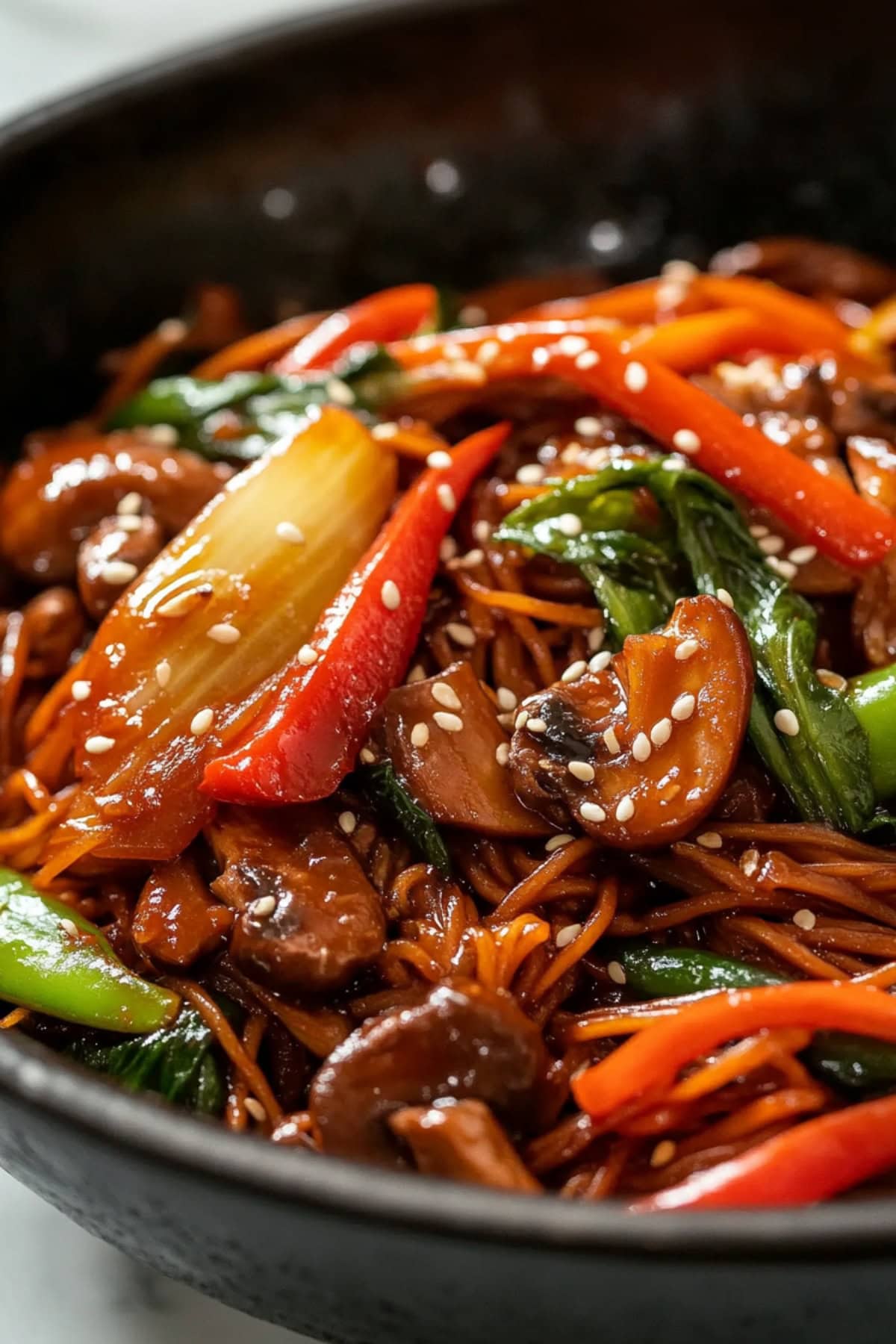
There are SO many ways to customize this recipe (hello, chicken lo mein)! But for a Chinese takeout-worthy experience, follow my tips.
- Prep first. Like all stir-fry recipes, lo mein cooks quickly. I always ensure I have everything ready beforehand to avoid overcooking.
- Swap the noodles. Can't find dried or fresh lo mein noodles? Spaghetti is the next best option. You could also try other Asian noodles like ramen or soba noodles.
- Don’t overcook the noodles! Cook them only to al dente or even slightly less. Otherwise, they’ll become mushy when you toss them with the sauce.
- Slice veggies uniform. I slice all the veggies about the same size. The more uniformly in size, the more evenly they’ll cook. If you add protein, slice or dice it evenly as well.
- Don’t crowd the pan. Sauté vegetables in batches if necessary. Overcrowding can cause steaming instead of stir-frying.
- Spice it up or down. Add more or less Sriracha to suit your taste. You could also add cayenne, red pepper flakes, or chili crisp to crank up the heat.
- Customize with add-ins. Add cooked chicken, shrimp, beef, pork, or tofu for protein. Or, add other veggies like water chestnuts, shredded cabbage, or bean sprouts.
How to Store
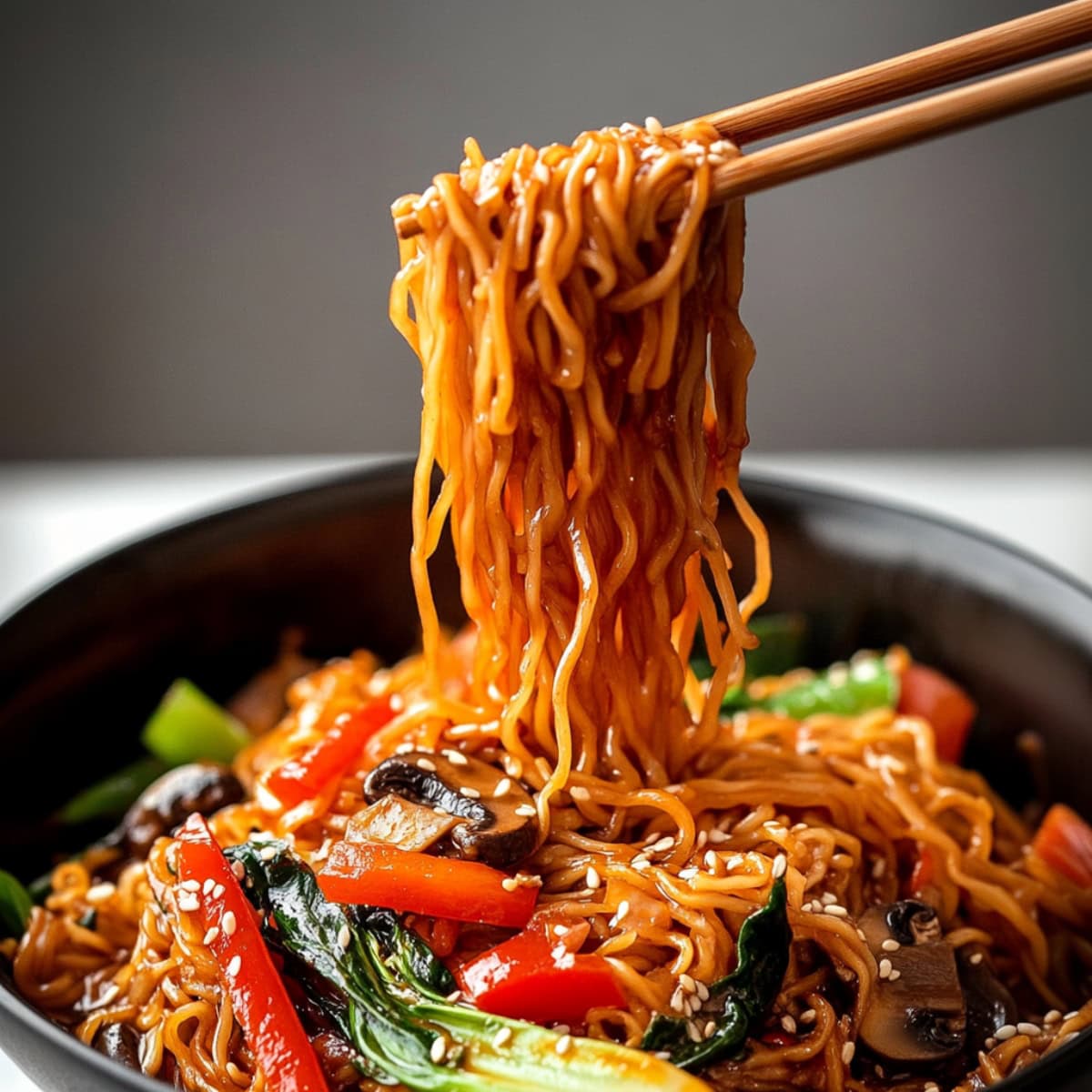
Lo mein is best enjoyed right when you make it. But I’ll be honest, those leftovers are pretty delicious too. I love pairing them with steamed rice, egg rolls, or Chinese soup for a complete meal.
Just keep in mind, these noodles don’t freeze well. The texture changes and becomes less appealing. Although, I doubt you’ll have a problem polishing off those leftovers!
To Store: Place cooled leftovers in an airtight container. Add a small splash of water or oil to prevent sticking. Refrigerate for up to 3-4 days.
To Reheat: Heat a tablespoon of oil over medium heat. Then, add the leftovers and toss frequently for 3-4 minutes until thoroughly heated. Or, reheat in the microwave in 30-second intervals. Add a tablespoon of water or soy sauce if needed.
More Asian Noodle Dishes You'll Love
Easy Lo Mein
This Easy Lo Mein is better than takeout! The chewy noodles, crisp veggies, and sweet, savory sauce make every bite crave-worthy.
4
servings10
minutes15
minutes309
kcalIngredients
- For the Sauce
4 tablespoons low-sodium soy sauce
4 teaspoons granulated sugar
2 teaspoons sesame oil
1 teaspoon ground ginger
1 teaspoon Sriracha
- For the Lo Mein
8 ounces lo mein noodles (or spaghetti)
1 tablespoon vegetable oil
2 cloves garlic, minced
1 small red bell pepper, julienned
1 small carrot, julienned
2 cups cremini mushrooms, sliced
1/2 cup snow peas
2 cups bok choy, chopped
2 green onions, thinly sliced (for garnish)
1 tablespoon sesame seeds (for garnish)
Instructions
- In a small bowl, whisk together the soy sauce, sugar, sesame oil, ground ginger, and Sriracha until well combined. Set aside.
- Bring a large pot of water to a boil. Cook the noodles according to the package instructions until al dente. Drain and set aside.
- Heat the olive oil in a large skillet or wok over medium-high heat. Add the minced garlic and cook for about 30 seconds, until fragrant. Stir in the red bell pepper, carrot, and mushrooms and sauté for 3-4 minutes. Or until the vegetables begin to soften. Add the snow peas and bok choy. Cook for an additional 2-3 minutes, stirring frequently, until the bok choy is tender.
- Lower the heat to medium and add the cooked noodles to the skillet. Pour the sauce over the noodles and veggies, gently tossing to coat everything evenly. Cook for 1-2 minutes, allowing the flavors to meld together.
- Transfer the lo mein to serving plates or bowls. Sprinkle with sliced green onions and sesame seeds. Serve immediately and enjoy!
Notes
- Use fresh lo mein noodles. They have the best flavor and consistency, but dried lo mein works too. If unavailable, spaghetti noodles are the next best substitute.
- Cook the noodles al dente. They’ll continue to soften as they absorb the sauce.
- Cut the veggies evenly. This helps ensure they cook properly. If using frozen veggies, thaw and thoroughly drain them first.
- Customize with add-ins. Add protein like cooked chicken, pork, shrimp, or tofu. You can also add in whatever veggies you have on hand.
Nutrition
- Total number of serves: 4
- Calories: 309kcal
- Fat: 7g
- Saturated Fat: 1g
- Sodium: 810mg
- Potassium: 449mg
- Carbohydrates: 52g
- Fiber: 3g
- Sugar: 7g
- Protein: 9g
- Vitamin A: 4426mcg
- Vitamin C: 49mg
- Calcium: 85mg
- Iron: 1mg