
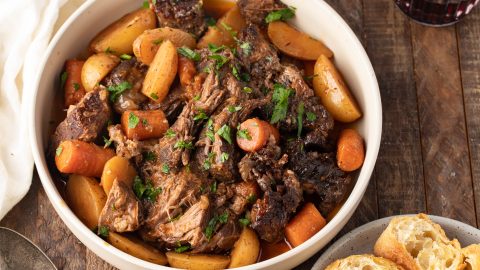



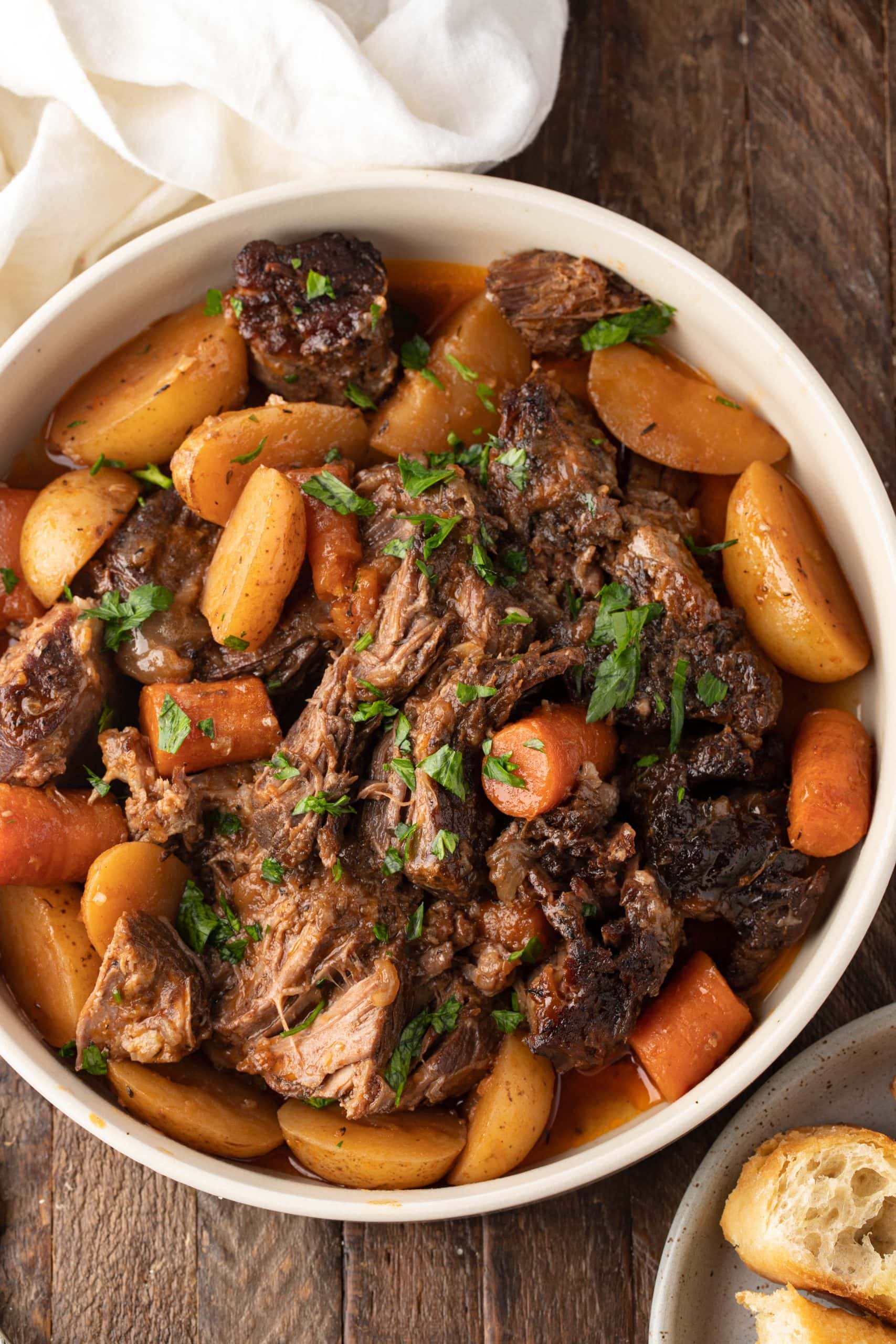
Classic Pot Roast is one of those meals that feels like home wherever I am. It’s warm, cozy, and packed with all the good stuff.
The magic happens low and slow, as the beef transforms from a tough cut into something irresistibly tender, practically falling apart with a fork.
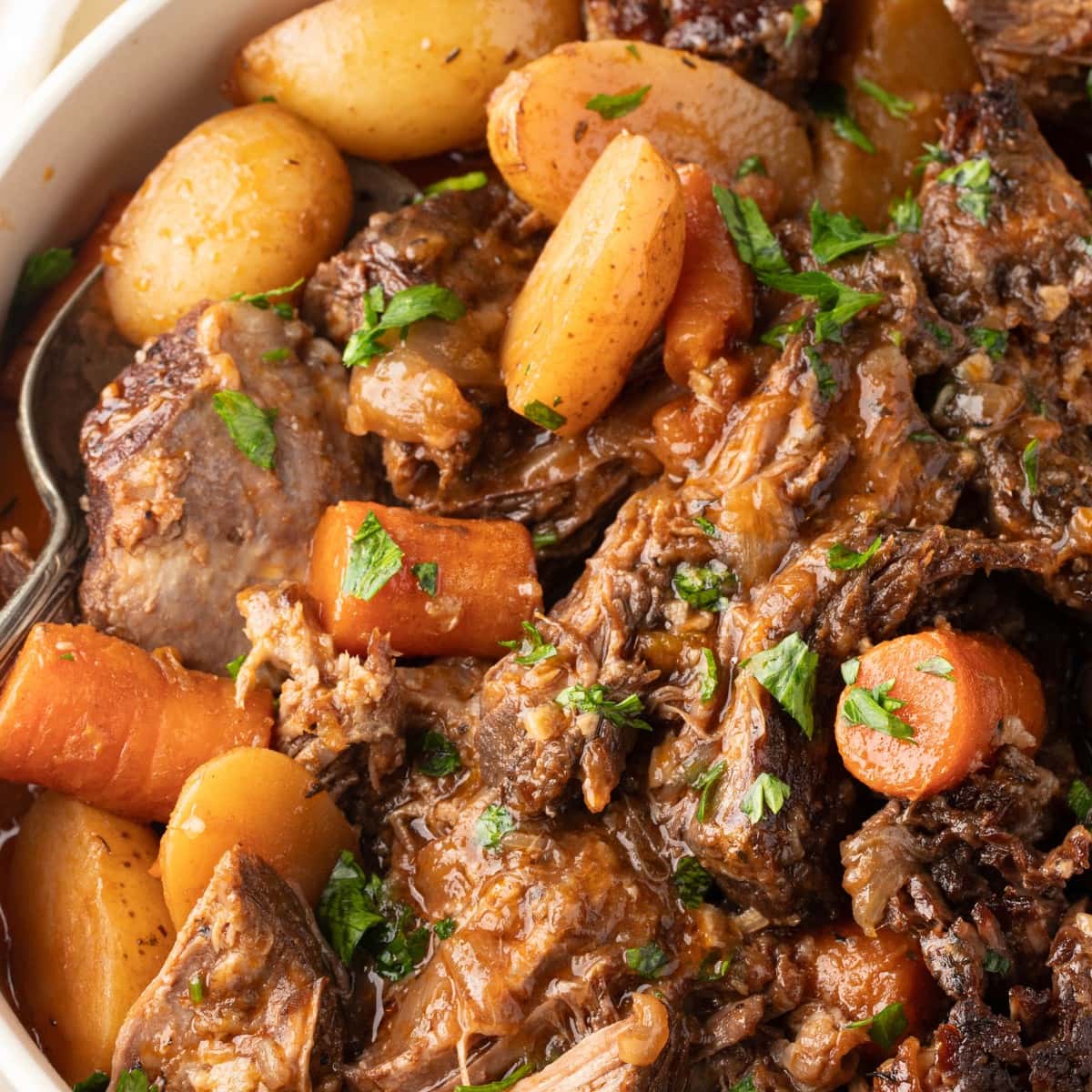
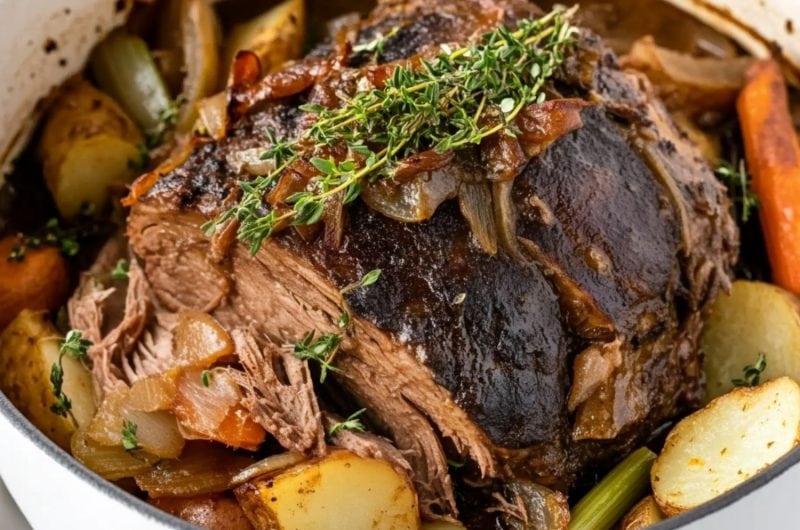
As the beef cooks, it releases its natural richness into the broth, while the vegetables soak up all the flavors, becoming soft and buttery.
WANT TO SAVE THIS RECIPE?
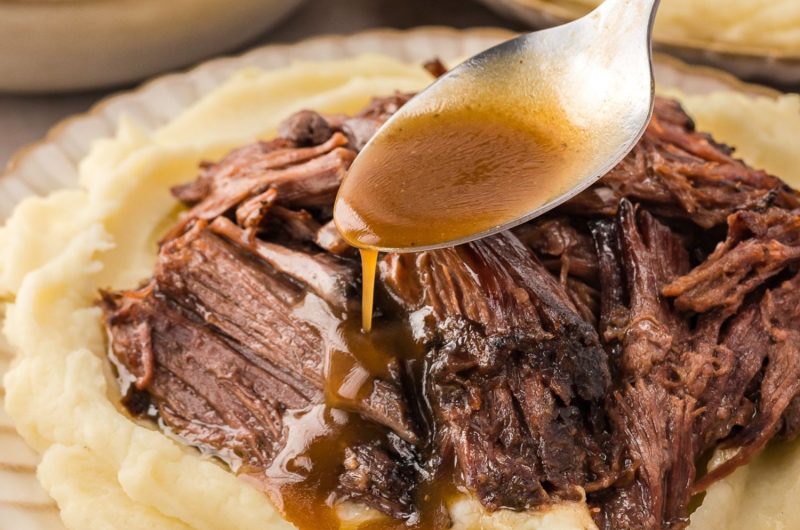
And don’t even get me started on that pot roast gravy. Thick, glossy, and packed with umami, it’s the kind of thing you’ll want to drizzle over everything on your plate.
I’m guilty of sneaking a spoonful straight from the pot.
I love serving it up for Sunday dinners, special occasions, or when I just need some comfort food in my life.
There’s a reason this crowd-pleasing classic Sunday pot roast has been a dinnertime favorite for generations—it’s just plain delicious!
Ingredients You'll Need
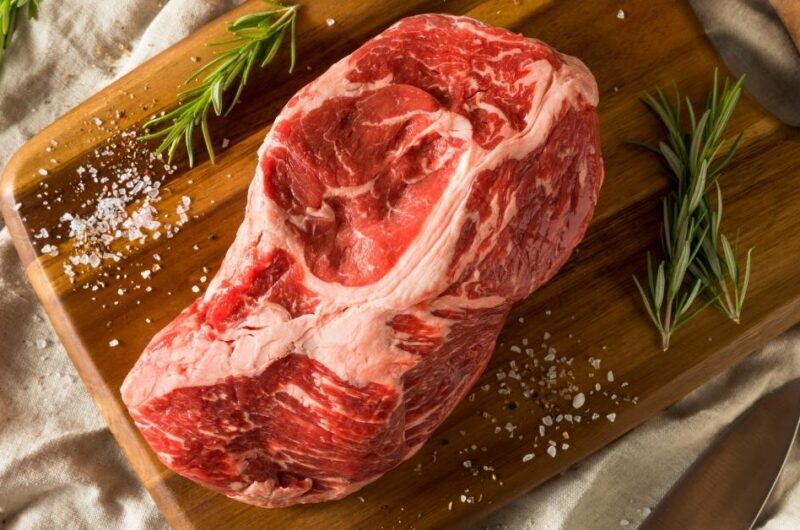
- Chuck Roast: There are other cuts of beef you can use, but beef chuck roast is my favorite. This well-marbled cut turns meltingly tender when braised low and slow.
- Olive Oil: It provides a slick surface for searing the roast to lock in flavor and form a tasty crust.
- Veggies & Aromatics: Carrots and gold potatoes soak up the rich braising liquid. Yellow onions, garlic, bay leaves, and dried thyme infuse the dish with a sweet and woodsy depth.
- Tomato Paste: It adds a concentrated punch of umami and subtle acidity to round out the flavors for a delicious broth.
- Dry Red Wine: To deglaze the pan and lend complex flavor notes to complement the beef. Choose one you'd happily drink! If I don't have red wine on hand, I will use balsamic vinegar or red wine vinegar.
- Low-Sodium Beef Broth: The liquid base keeps things saucy. I always use reduced sodium so I can control the salt.
- Bay Leaves and Dried Thyme: Woodsy herbs perfume the pot roast with distinctive aromas.
- Worcestershire Sauce: It provides an extra dimension of savory, meaty flavor. My favorite brand is Lea & Perrins because it creates complex umami depth.
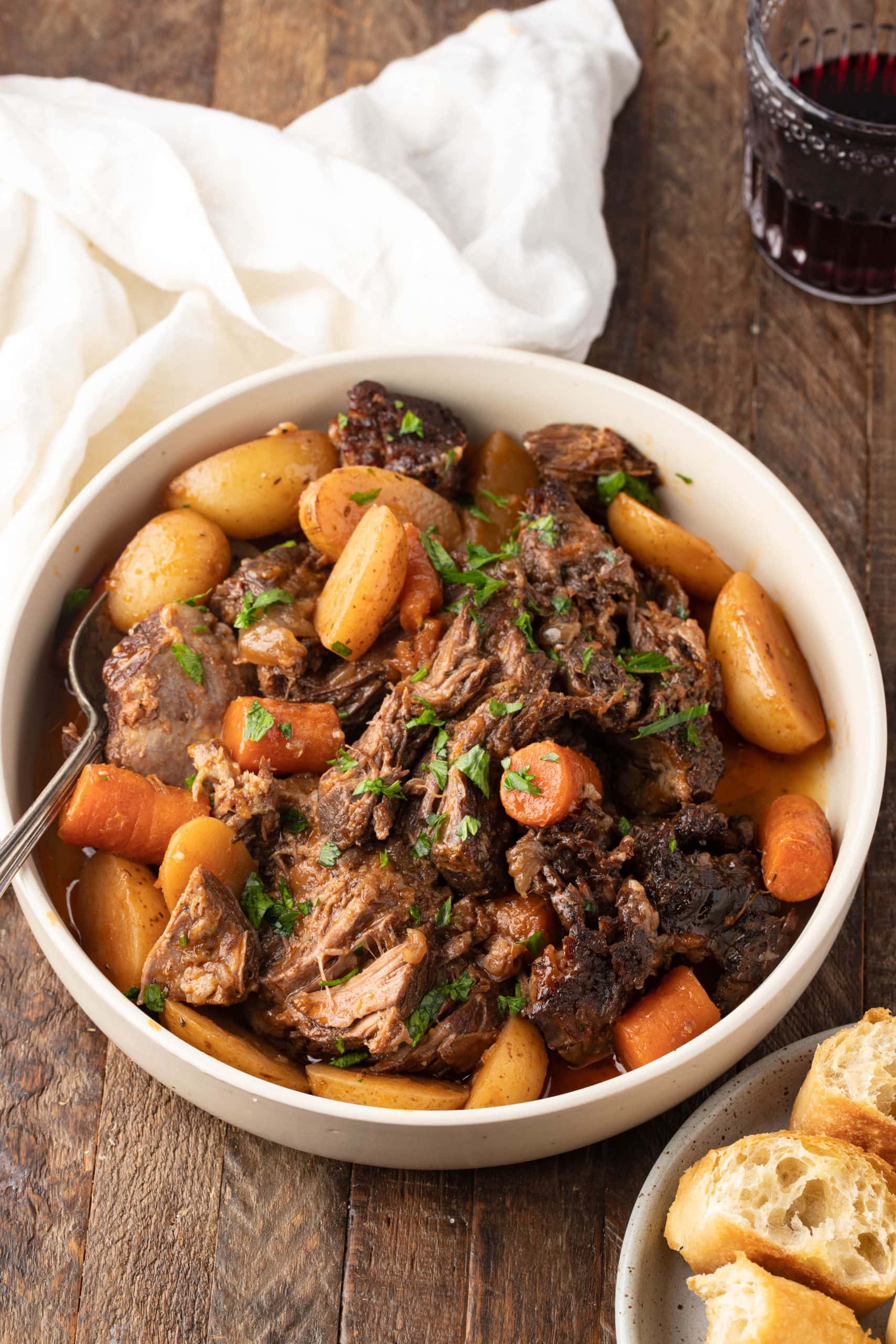
How to Make this Classic Pot Roast Recipe
Making a flavorful fork-tender pot roast isn’t complicated, but it does require a little patience—and trust me, it’s worth it.
It’s slow-cooked comfort food at its finest, and if you do it right, it’ll make your grandma proud. Here's how I do it:
1. Prep. Preheat the oven to 325°Fahrenheit. Pat the chuck roast dry with paper towels. Season generously on all sides with salt and pepper.
2. Sear. Heat the olive oil in a large Dutch oven or heavy-bottomed pot over medium-high heat. Sear the chuck roast on all sides until deeply browned, about 15 minutes. Transfer to a plate.
3. Cook the veggies. Add the onions and carrots to the pot. Cook, stirring occasionally, until softened, about 5 minutes. Stir in the garlic and tomato paste and cook for 1 minute.
4. Deglaze. Pour in the wine and scrape up any browned bits from the bottom of the pot with a wooden spoon. Simmer for 2 minutes.
5. Add the other ingredients. Add the beef broth, potatoes, bay leaves, thyme, and Worcestershire sauce. Stir to combine. Return the roast and any accumulated juices to the pot.
6. Slow cook. Bring the liquid to a boil. Cover the pot and transfer to the oven. Cook until the chuck roast is fork-tender, about 3 to 3 1/2 hours.
7. Finish. Transfer the roast and vegetables to a serving platter. Discard the bay leaves. Skim the excess fat from the surface of the cooking liquid.
8. Make the gravy. Make the pot roast gravy by whisking 1/4 cup flour into 1/4 cup of the cooking liquid in a saucepan to make a paste. Gradually whisk in the remaining liquid and simmer until thickened. Season with salt and pepper to taste.
9. Serve. Slice or shred the tender beef and serve with the vegetables and pot roast gravy. Garnish with chopped parsley if desired. Enjoy!
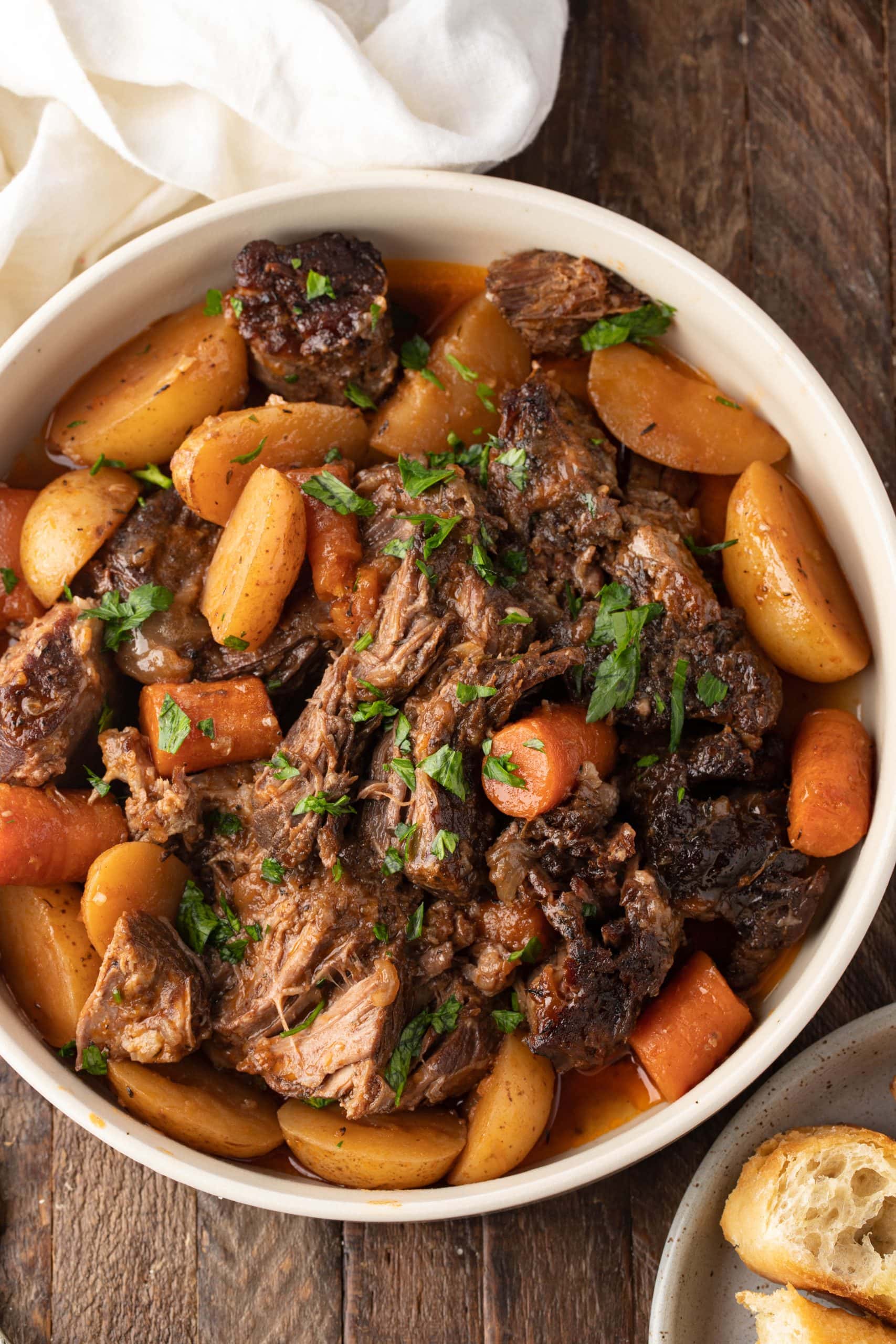
Tips for the Best Classic Pot Roast
Pot roast is pretty forgiving, but over the years I’ve picked up a few tricks to make it even better.
Here are some of the things I’ve learned:
- Tie your roast. Chuck roasts don't always have a uniform shape, so I like to use kitchen twine to tie it into a more even form. This helps the roast cook more evenly.
- Always brown the roast first. I know it seems like a finicky step, but browning the roast is super important. Not only does it lock in juices, but it creates a golden-brown crust that adds complexity to the taste.
- Let it rest! Once your roast is done, let it rest for about 10-15 minutes before slicing. This helps the juices redistribute, making the meat more tender and juicy.
- Try tasty variations. Add vegetables like parsnips, pearl onions, baby potatoes, turnips, or mushrooms. Experiment with different fresh herbs like rosemary or parsley. Use Guinness or stout instead of wine for a deeper flavor.
- Use fresh herbs. I like to take my pot roast to the next level with herbs from the garden, like fresh thyme. Unlike dried herbs that go in the pot early, it’s best to put dried herbs in the pot about an hour before it’s done cooking.
- Make it a true feast. Serve the pot roast with the braising liquid as a sauce, or thicken it into a gravy. Shred the meat and use it in sandwiches, tacos, or on top of mashed potatoes. Garnish with chopped parsley for freshness.
What's the Best Beef for Pot Roast?
What I love most about a classic pot roast dinner is it's affordable! The best cuts for this recipe are tougher and have more connective tissue, so you get a real bang for your buck.
Here are some of the best cuts I like to use for perfectly tender and juicy pot roast:
- Chuck: Boneless chuck roast is my favorite cut of meat for a tender pot roast. It’s well-marbled, affordable, and breaks down into tender, succulent pieces.
- Brisket: Brisket has a bit more fat and is perfect for slow cooking. It becomes very tender and can be shredded or sliced depending on your preference.
- Round: It’s less lean than chuck or brisket, which means you’ll need to keep an eye on it to prevent it from drying out.
- Rump: Rump roast is a little leaner and firmer than the other cuts of meat. I like to use rump roast when I want sliceable pieces (as opposed to shredded).
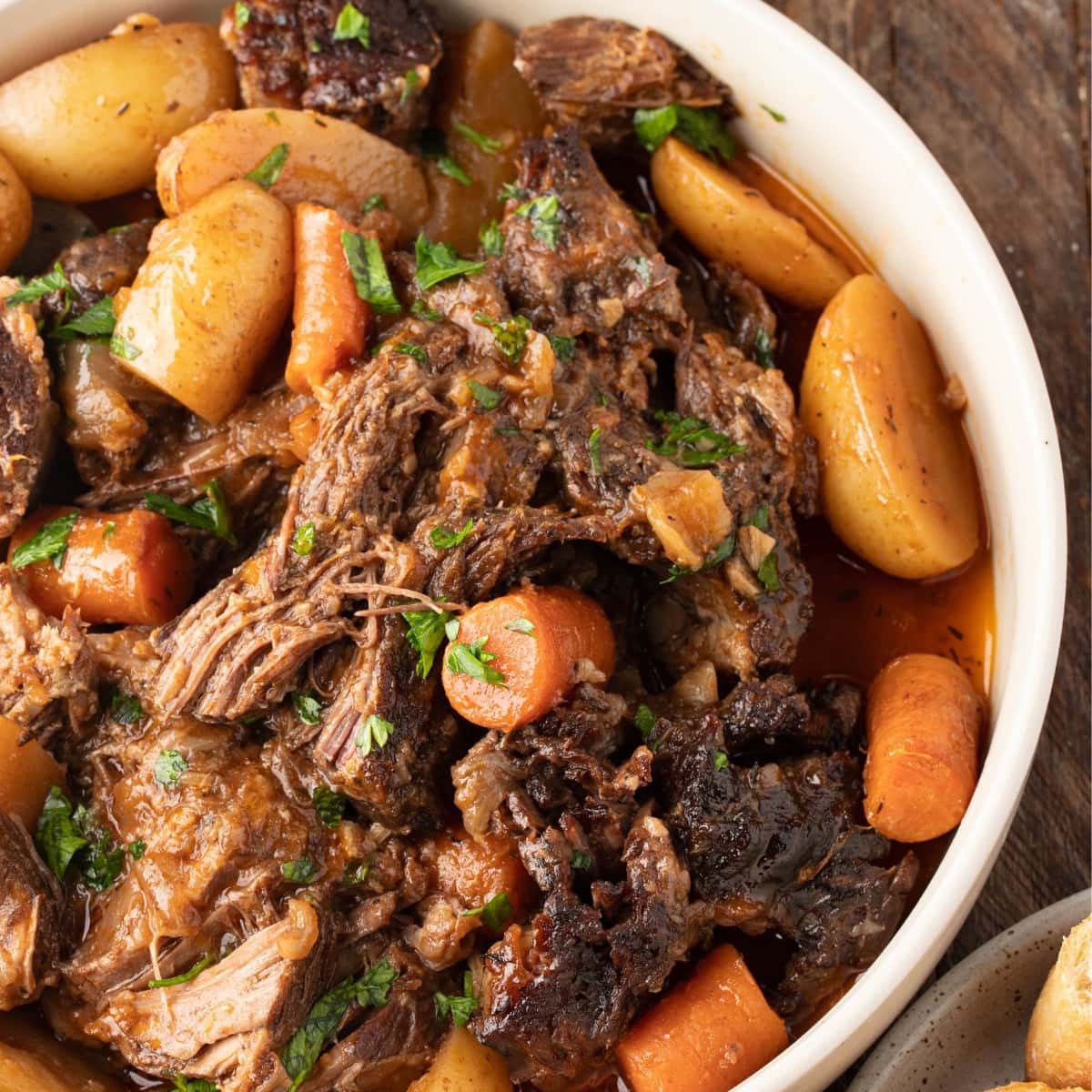
How to Store
Got leftovers? No problem! Nothing makes me happier than knowing there’s pot roast leftovers in the fridge.
Here’s how I store this pot roast recipe so it stays fresh and delicious for the next few days.
To Store: Place the leftover pot roast and vegetables in an airtight container and refrigerate for up to 4 days. Store the gravy in a separate air-tight container in the fridge.
To Freeze: Allow the pot roast to cool completely. Then, transfer it to freezer-safe containers or resealable bags, removing as much air as possible. Freeze for up to 3 months.
To Reheat: Transfer the desired amount of pot roast, vegetables, and pot roast gravy to an oven-safe dish. Cover it with foil and bake at 350°Fahrenheit until warm, 25-30 minutes. Reheat individual portions in the microwave, covered, in 30-second intervals until hot.
More Classic Comfort Food Recipes You’ll Love
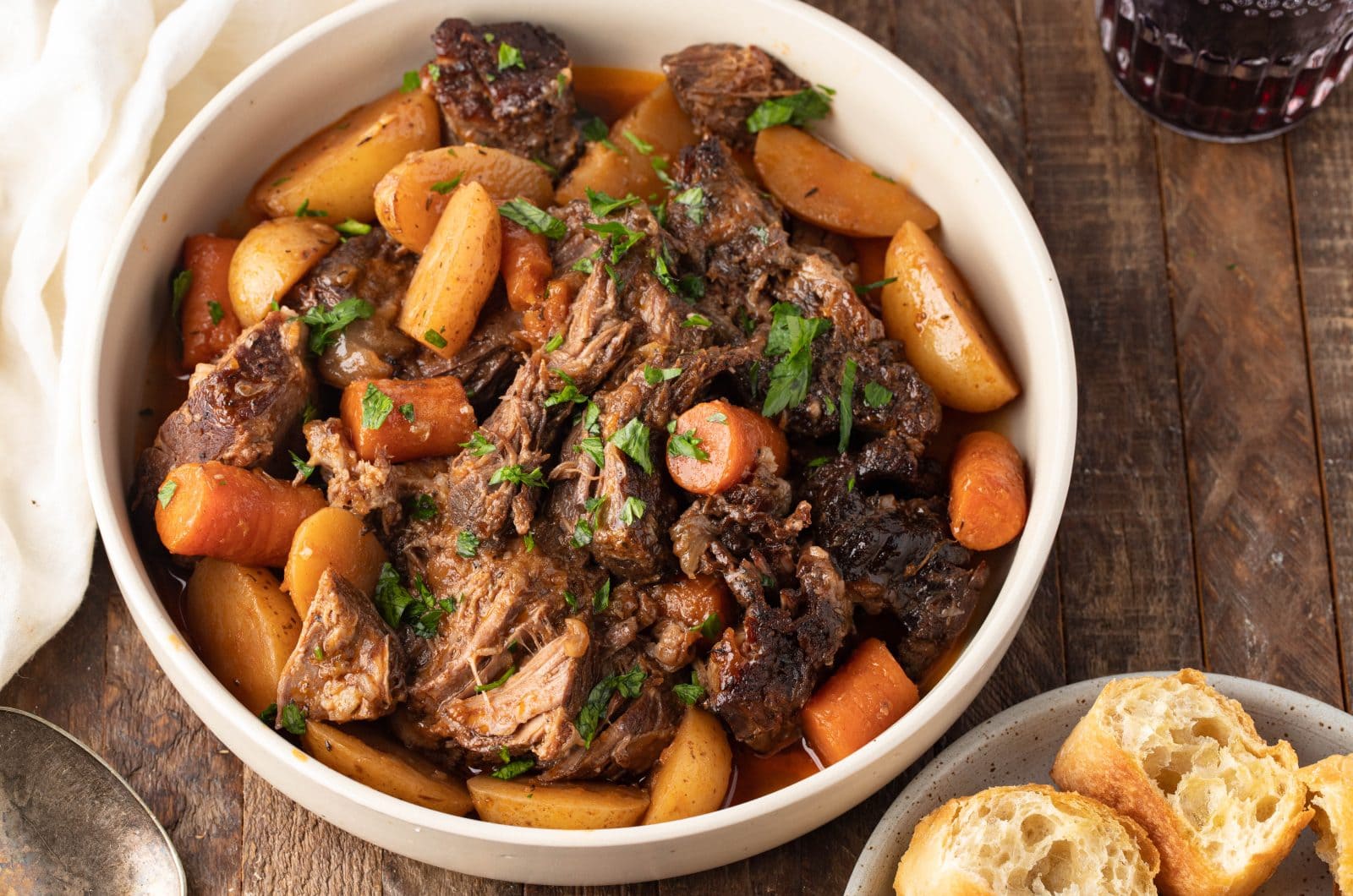
Classic Pot Roast
This Classic Pot Roast recipe features tender, melt-in-your-mouth beef surrounded by aromatic herbs, sweet caramelized veggies, and a savory gravy.
8
servings30
minutes6
hours30
minutes575
kcalIngredients
4 pound chuck roast, tied
2 teaspoons kosher salt
1 teaspoon black pepper
2 tablespoons olive oil
2 large yellow onions, chopped into 1-inch pieces
4 large carrots, peeled and cut into 2-inch chunks
1 1/2 pounds small yellow potatoes, cut into 1-inch pieces
8 cloves garlic, minced
2 tablespoons tomato paste
1 cup dry red wine
2 cups low-sodium beef broth
2 bay leaves
2 teaspoons dried thyme
2 tablespoons Worcestershire sauce
Instructions
- Preheat the oven to 325°Fahrenheit. Pat the chuck roast dry with paper towels and season generously on all sides with the salt and pepper.
- Heat the olive oil in a large Dutch oven over medium-high heat. Sear the roast on all sides until deeply browned, about 15 minutes. Transfer to a plate.
- Add the onions and carrots to the pot. Cook, stirring occasionally, until softened, about 5 minutes. Stir in the garlic and tomato paste and cook for 1 minute.
- Pour in the wine and scrape up any browned bits from the bottom of the pot with a wooden spoon. Simmer for 2 minutes.
- Add the beef broth, potatoes, bay leaves, thyme, and Worcestershire sauce. Stir to combine. Return the roast and any accumulated juices to the pot.
- Bring the liquid to a boil. Cover the pot and transfer to the oven. Cook until the roast is fork-tender, about 3 to 3 1/2 hours.
- Transfer the roast and vegetables to a serving platter. Discard the bay leaves. Skim excess fat from the surface of the cooking liquid.
- Make a gravy by whisking 1/4 cup flour into 1/4 cup of the cooking liquid in a saucepan to make a paste. Gradually whisk in the remaining liquid and simmer until thickened. Season with salt and pepper to taste.
- Slice or shred the pot roast and serve with the vegetables and gravy. Garnish with chopped parsley if desired. Enjoy!
Notes
- For best results, check the meat at the 3-hour mark—it should be fork-tender and easy to shred.
- If the roast looks dry during cooking, feel free to add more broth or water. You want enough liquid to cover the roast halfway, but not submerge it completely.
- Let the roast rest for about 10-15 minutes before slicing to help redistribute the juices for a tender and juicy roast.
- Skim off excess fat from the surface of the cooked braising liquid for a cleaner, less greasy sauce.
Nutrition
- Total number of serves: 8
- Calories: 575kcal
- Fat: 29g
- Saturated Fat: 11g
- Cholesterol: 156mg
- Sodium: 994mg
- Potassium: 1493mg
- Carbohydrates: 25g
- Fiber: 3g
- Sugar: 4g
- Protein: 47g
- Vitamin A: 6123IU
- Calcium: 87mg
- Iron: 6mg
- Vitamin B12: 6mg
- Zinc: 17mg
- Selenium: 47mg




7 Comments
I want to slow cook chuck roast in my crock pot on low for 6 hrs , do you think your recipe will good with this one change ?
I love the recipes but I have only tried a few because there are only the two of us now and I seldom get to cook for a larger group.
I love your recipes Kim.
I’m always trying new ones and my friends think I’m a great cook. I’m really not, but your easy to follow recipes make me seem like one!
Take care, Jim
Is there a reason why you do not have the ‘save this recipe with each recipe?
Hi Brenda!
We’re having an issue with feature but we’re hoping to have it back up and running asap!
this is what was served almost every Sunday. it always smelled so good. it’s tasty and filling.
Yeah. I had this a lot growing up, too. <3