
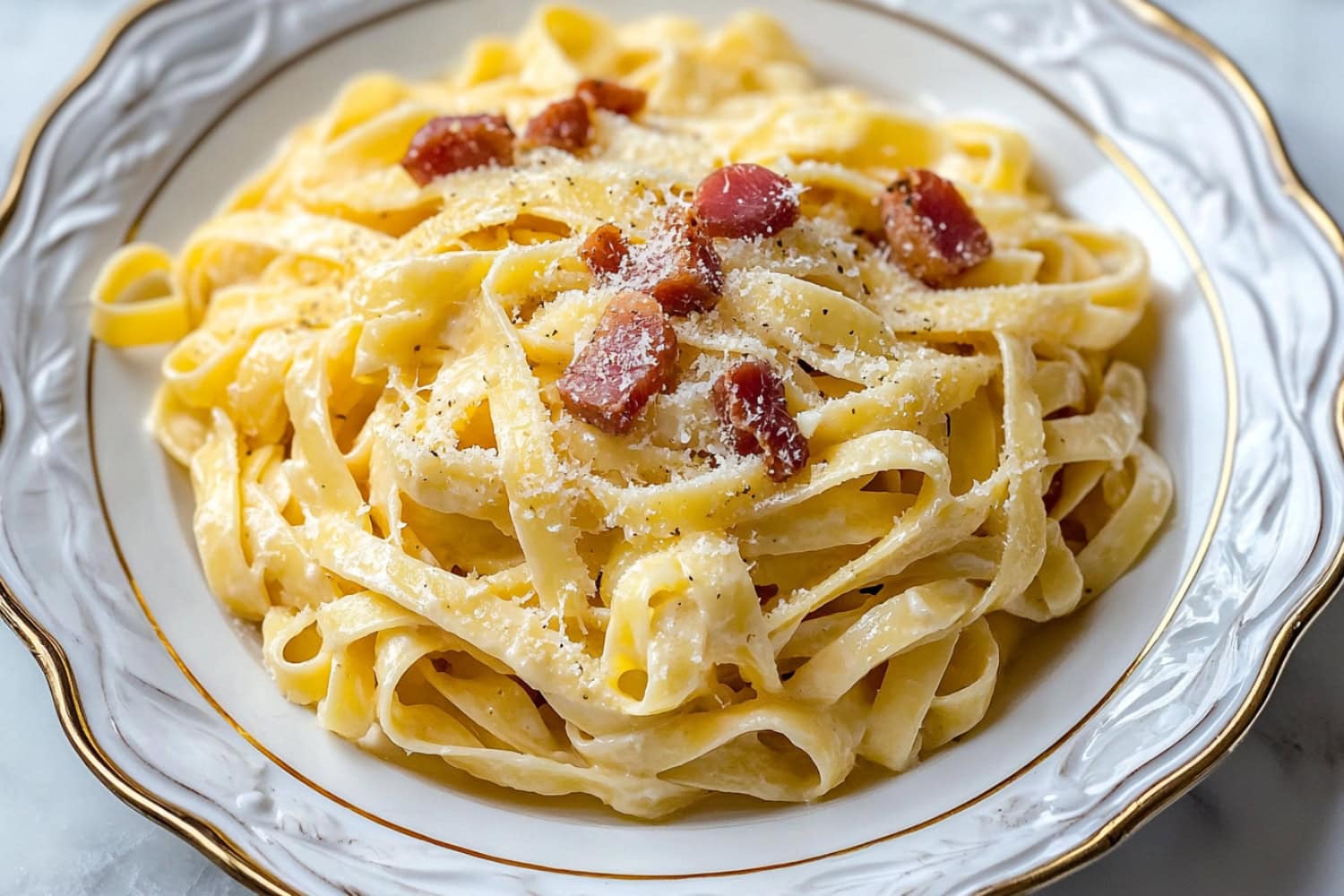

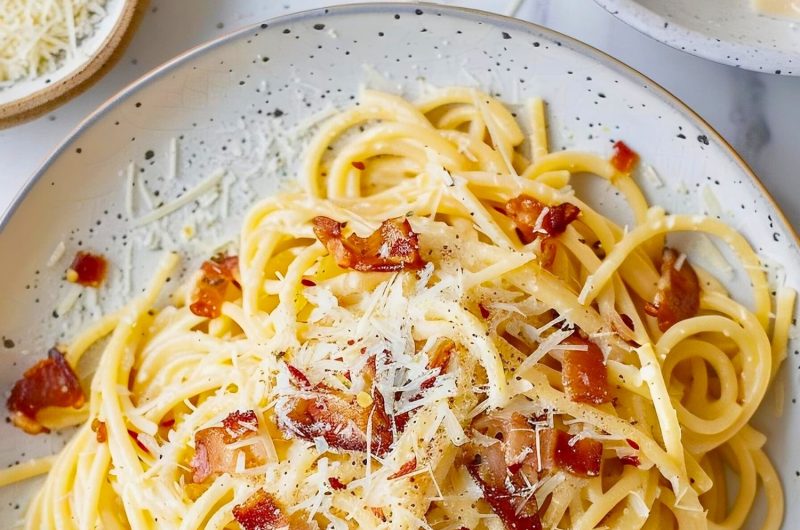
For me, Fettuccine Carbonara is like Italy’s way of giving me a warm, carb-filled hug.
Every time I make it, I’m amazed by how something so simple can taste so luxurious.
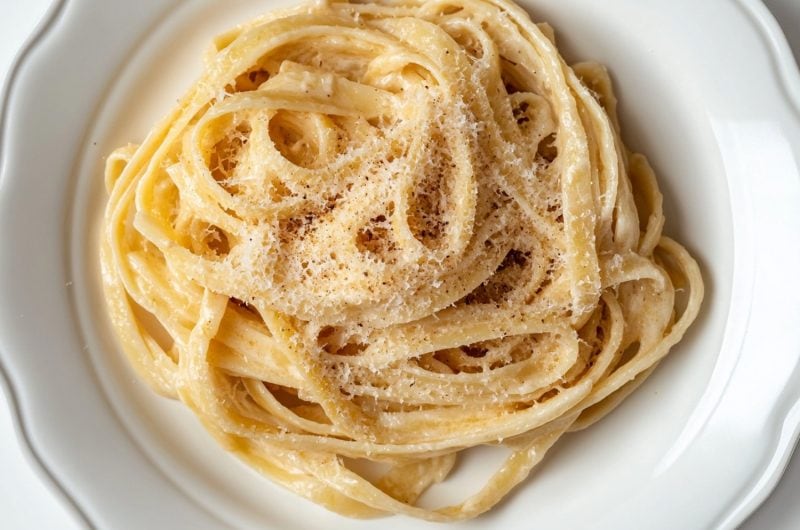
The real magic happens when the heat of the pasta melts eggs and aged Parmigiano-Reggiano into a silky, rich sauce that coats every strand.
WANT TO SAVE THIS RECIPE?
There’s no heavy cream here—just the magic of hot pasta melting everything together into a rich, glossy coating. A little black pepper for heat, and boom—perfection on a plate.
The best part? It comes together with just a handful of simple ingredients, but the flavor is pure magic.
This dish is my go-to when I want to impress someone—or, let’s be real, just treat myself. Once you try it, you'll be addicted!
Ingredients You'll Need
- Fettuccine: This wide, flat pasta is the heart of carbonara. Its flat surface is perfect for capturing the creamy sauce.
- Pancetta or Guanciale: They offer a saltiness to enhance the flavors of the carbonara sauce. I sometimes have trouble finding traditional guanciale at my local meat counter, but thankfully pancetta works just as well!
- Eggs: They give the sauce a luxurious, creamy texture and golden hue.
- Parmigiano-Reggiano: The rich, nutty flavors integrate perfectly with the eggs to enrich the creamy sauce. I like to have a little extra finely grated Parmesan cheese on hand for garnishing! Pecorino cheese is a great option, too.
- Garlic: Although not traditional in Italy, finely diced garlic adds zest, preventing the dish from being bland.
- Freshly Ground Black Pepper: It’s essential for seasoning. I recently bought a pepper grinder, and I'll never go back to pre-ground pepper. It makes such a huge difference in flavor!
- Salt: It’s used in the pasta water to intensify the flavor.
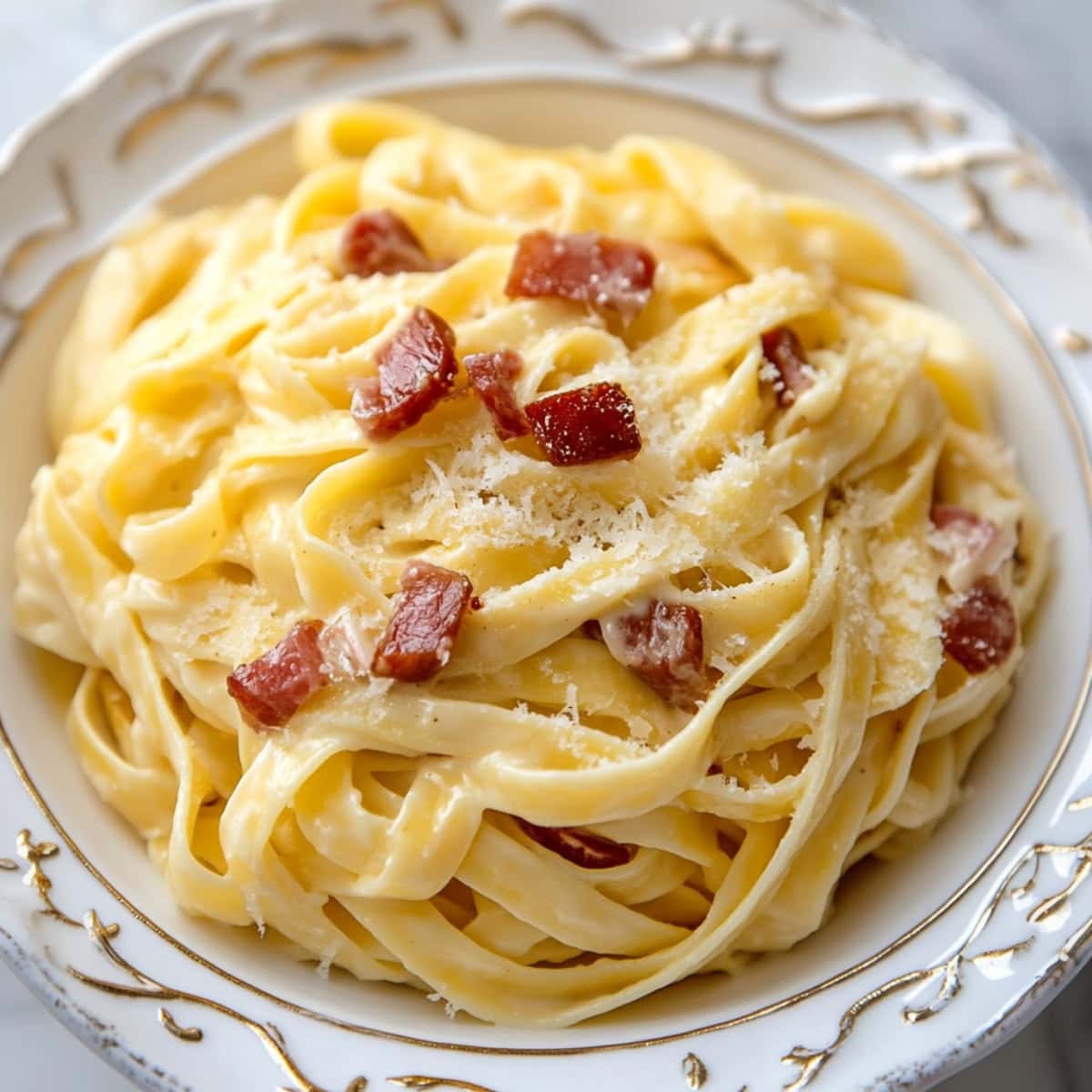
How to Make Fettuccine Carbonara
I promise this dish isn’t intimidating! I love making this dish because it comes together with just a few simple ingredients, and the results are always so impressive. Just follow these simple steps.
1. Prepare the egg mixture. In a large mixing bowl, whisk together 2 whole eggs, 2 egg yolks, grated Parmigiano-Reggiano, and a generous amount of freshly ground black pepper until smooth. Set aside.
2. Cook the pasta. Bring a large pot of salted water to a boil. Add the fettuccine to the pasta cooking water and cook according to package instructions until al dente.
3. Cook the pancetta. While the pasta cooks, heat a large frying pan over medium heat. Add the pancetta or guanciale and sauté until golden and crispy (about 5-6 minutes).
4. Add the garlic. Stir in the finely chopped garlic to the bacon mixture and cook for about 1 minute, just until fragrant. Be careful not to let the garlic burn.
5. Reserve some pasta water. Before draining the pasta, reserve 1 cup of the pasta water.
6. Combine the pasta and pancetta. Transfer the hot, drained pasta directly into the skillet with the pancetta and garlic. Toss to coat the pasta in the rendered fat.
7. Make the sauce. Remove the skillet from the heat. Quickly pour the egg and cheese mixture over the pasta, tossing vigorously with tongs to coat. Add the reserved pasta water gradually, a little at a time, until a silky sauce forms. (I usually don't need the entire cup. Add just enough to achieve your desired consistency.)
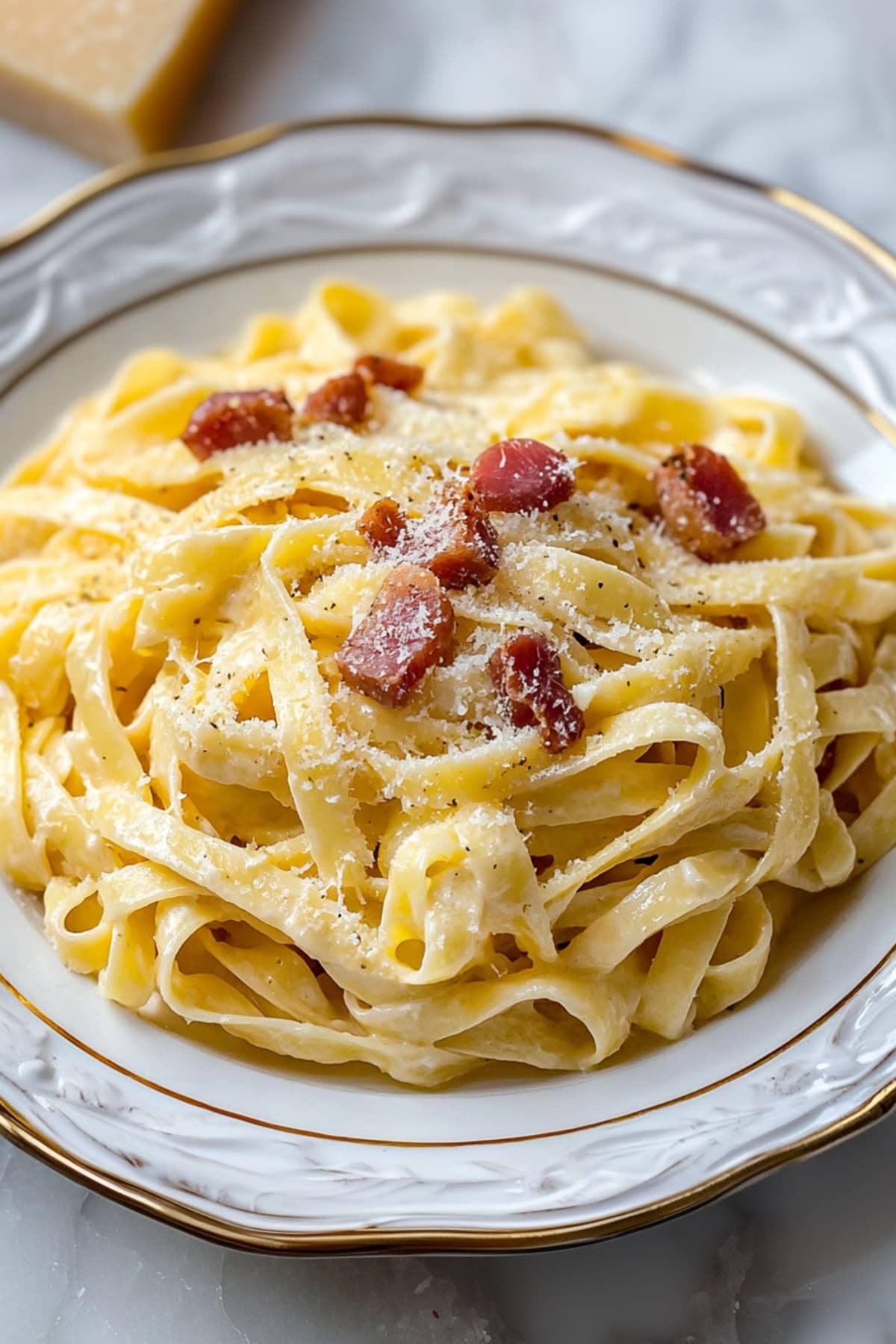
8. Serve. Plate the pasta immediately. Top with extra Parmesan cheese and freshly ground black pepper to taste.
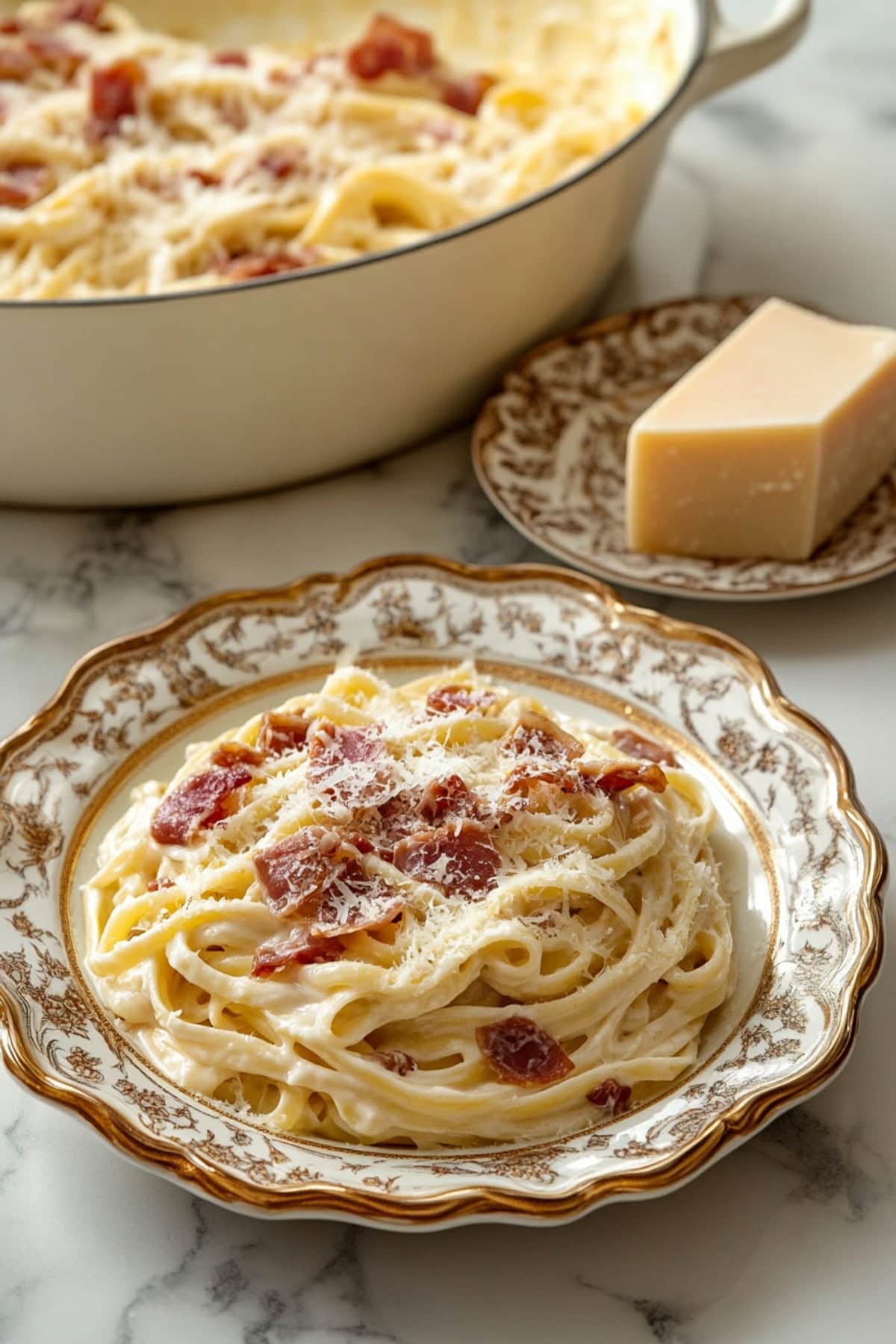
Tips for the Best Fettuccine Pasta Carbonara
I’ve got some tried-and-true tips to help you nail it every time. Let’s make some pasta magic!
- Select your favorite meat. I found that traditional guanciale (cured pork cheek) provides the most authentic flavor. But pancetta is an excellent alternative if guanciale isn't available.
- Skip the pre-grated stuff. I always use freshly grated Parmigiano-Reggiano. Pre-grated cheese often contains anti-caking agents that can make your sauce grainy.
- Room temperature is a must. Bring the eggs to room temperature before starting. Cold eggs cause the sauce to seize up when combined with hot pasta.
- Don’t get scrambled! Never add the egg mixture while the pan is still on the heat. This is the number one rule to prevent scrambled eggs instead of a silky sauce.
- Serve it in style. Serve immediately on warmed plates drizzled with olive oil. The sauce thickens as it cools, so timing is crucial for the perfect consistency. I like to pair it with a crisp green salad and a light Italian white wine like Frascati or Pinot Grigio.
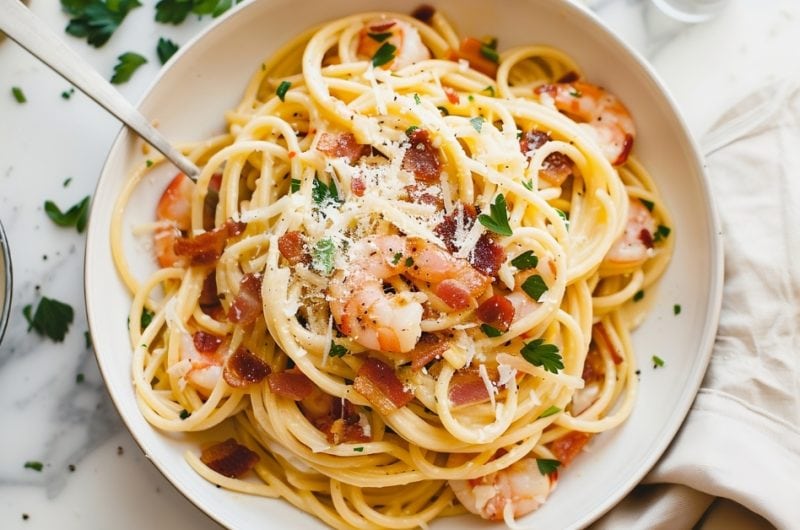
- Try fun variations. Substitute bacon for pancetta/guanciale. Add peas for color and sweetness. Mix in Pecorino Romano for a sharper, saltier flavor. I take the simple route with just a drizzle of my best olive oil!
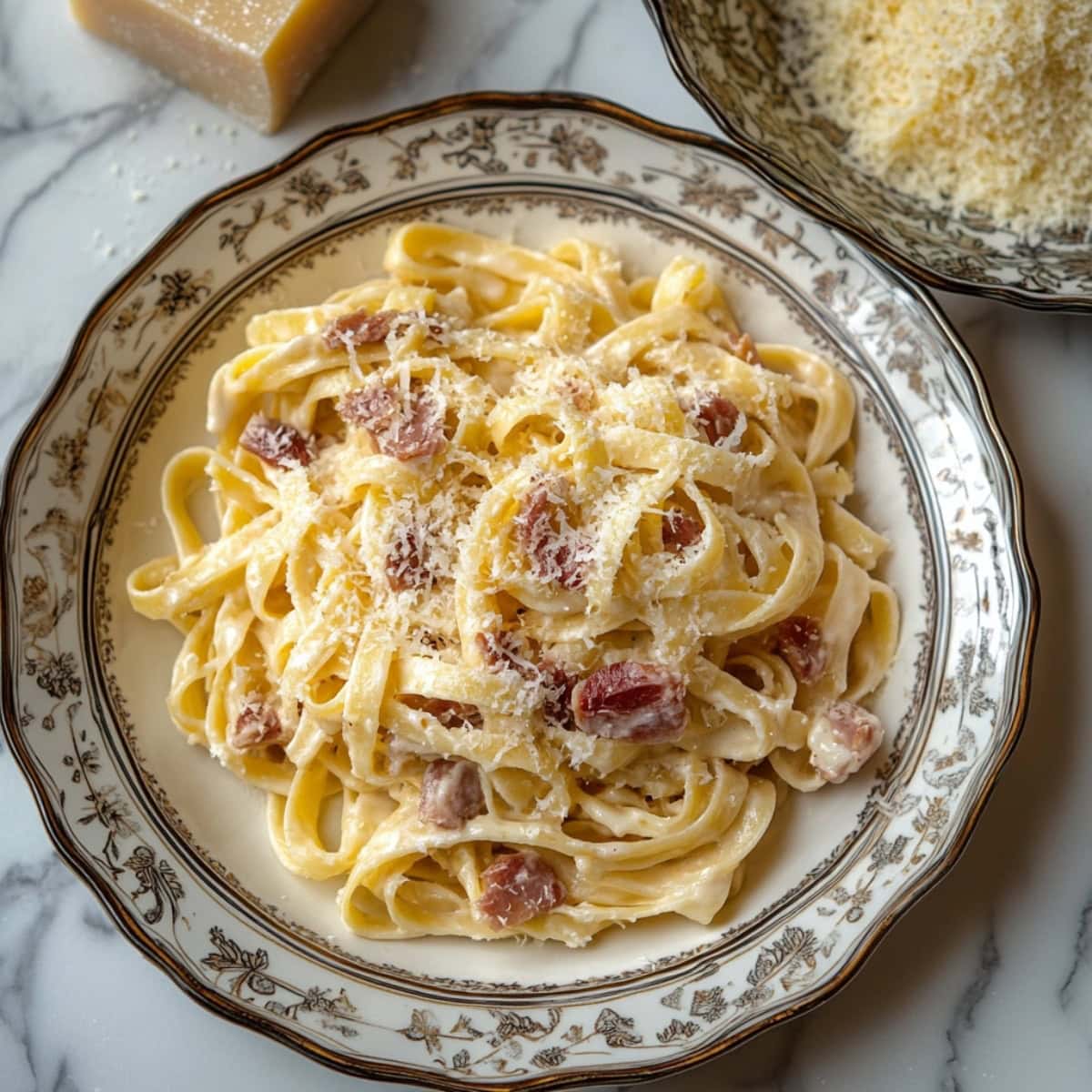
How to Store
Have leftover pasta? Here’s how I keep it fresh.
To Store: Place leftovers in an air-tight container and refrigerate promptly, ideally within 2 hours of cooking. Store in the fridge for up to 3-4 days, but consuming it sooner ensures better flavor and texture. Do not freeze this recipe, as the consistency will change.
To Reheat: Reheat gently on the stovetop by adding a small amount of olive oil, butter, or cream to a skillet over low heat. Stir continuously to restore the creamy consistency. Or use a bain-marie to even heat or microwave in short intervals. I always add a splash of liquid if needed to prevent drying out.
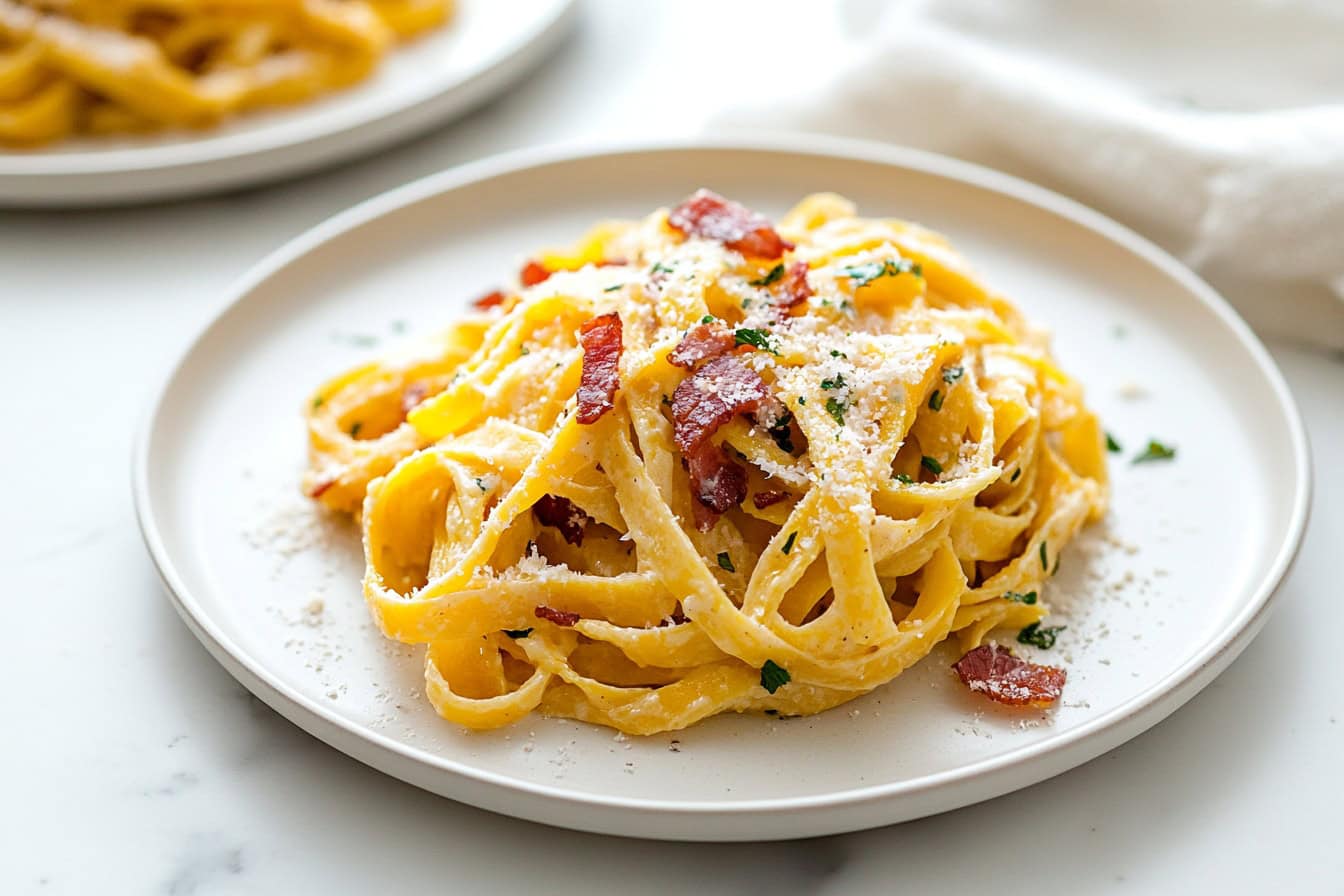
Fettuccine Carbonara
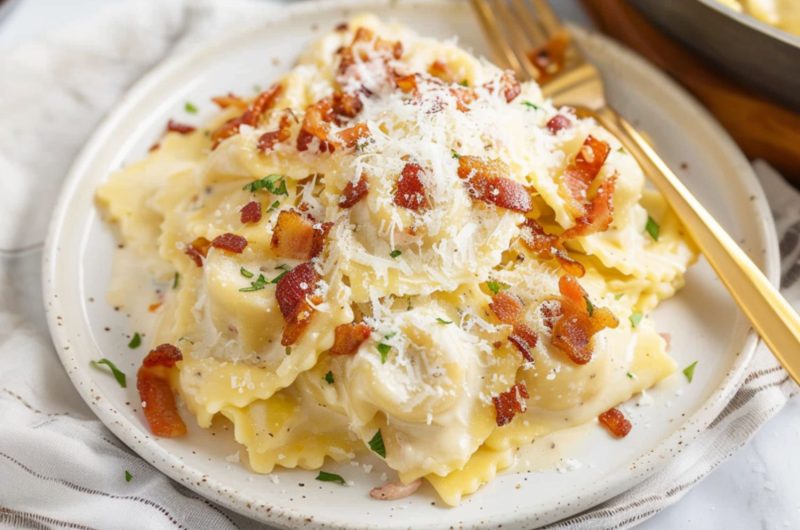
This fettuccine carbonara is so luxurious and indulgent! The combination of pancetta, Parmesan cheese, and eggs creates a dish fit for a king.
4
servings10
minutes20
minutes763
kcalIngredients
16 oz fettuccine
150 g pancetta or guanciale, cut into batons
4 large eggs (2 whole eggs + 2 yolks)
1 cup freshly grated Parmigiano-Reggiano
2 cloves garlic, minced
Freshly ground black pepper
Salt for pasta water
Instructions
- In a large mixing bowl, whisk together 2 whole eggs, 2 egg yolks, grated Parmigiano-Reggiano, and a generous amount of freshly ground black pepper until smooth. Set aside.
- Bring a large pot of salted water to a boil. Add the fettuccine and cook according to package instructions until al dente.
- While the pasta cooks, heat a large skillet over medium heat. Add the pancetta or guanciale and sauté until golden and crispy (about 5-6 minutes).
- Stir in the minced garlic and cook for about 1 minute, just until fragrant. Be careful not to let the garlic burn.
- Before draining the pasta, reserve 1 cup of the starchy cooking water.
- Transfer the hot, drained pasta directly into the skillet with the pancetta and garlic. Toss to coat the pasta in the rendered fat.
- Remove the skillet from the heat. Quickly pour the egg and cheese mixture over the pasta, tossing vigorously with tongs to coat. Add the reserved pasta water gradually, a little at a time, until a silky sauce forms. (You may not need the entire cup—add just enough to achieve your desired consistency.)
- Plate the pasta immediately. Top with additional grated Parmigiano-Reggiano and freshly ground black pepper to taste.
Notes
- Remove the skillet from the heat before adding the egg mixture to prevent the eggs from scrambling.
- Work quickly and continuously toss the pasta to ensure the sauce emulsifies evenly and becomes creamy.
- The reserved starchy pasta water is crucial for creating the smooth, glossy sauce. Add it gradually to control the consistency of the sauce.
- While Parmigiano-Reggiano is traditional, you can also mix in Pecorino Romano for a sharper, saltier flavor.
Nutrition
- Total number of serves: 4
- Calories: 763kcal
- Fat: 31g
- Saturated Fat: 11g
- Cholesterol: 323mg
- Sodium: 763mg
- Carbohydrates: 82g
- Fiber: 3g
- Sugar: 2g
- Protein: 36g
- Calcium: 368mg
- Phosphorus: 602mg
- Selenium: 118mcg
2 Comments
Happy New Year, Kim!
Can’t wait to try this…exactly what I was looking for!
My mom used to make homemade mini dumplings and add mix them in buttery scrambled eggs. So comforting.🥰
Thanx so much!
Carmel
Happy New Year, Kim!
Can’t wait to try this…exactly what I was looking for!
My mom used to make homemade mini dumplings and add mix them in buttery scrambled eggs. So comforting.ð¥°
Thanx so much!
Carmel